|
Dennis
Simmons CARF Spitfire Project |
|
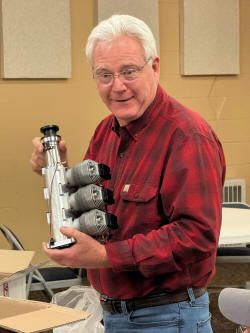
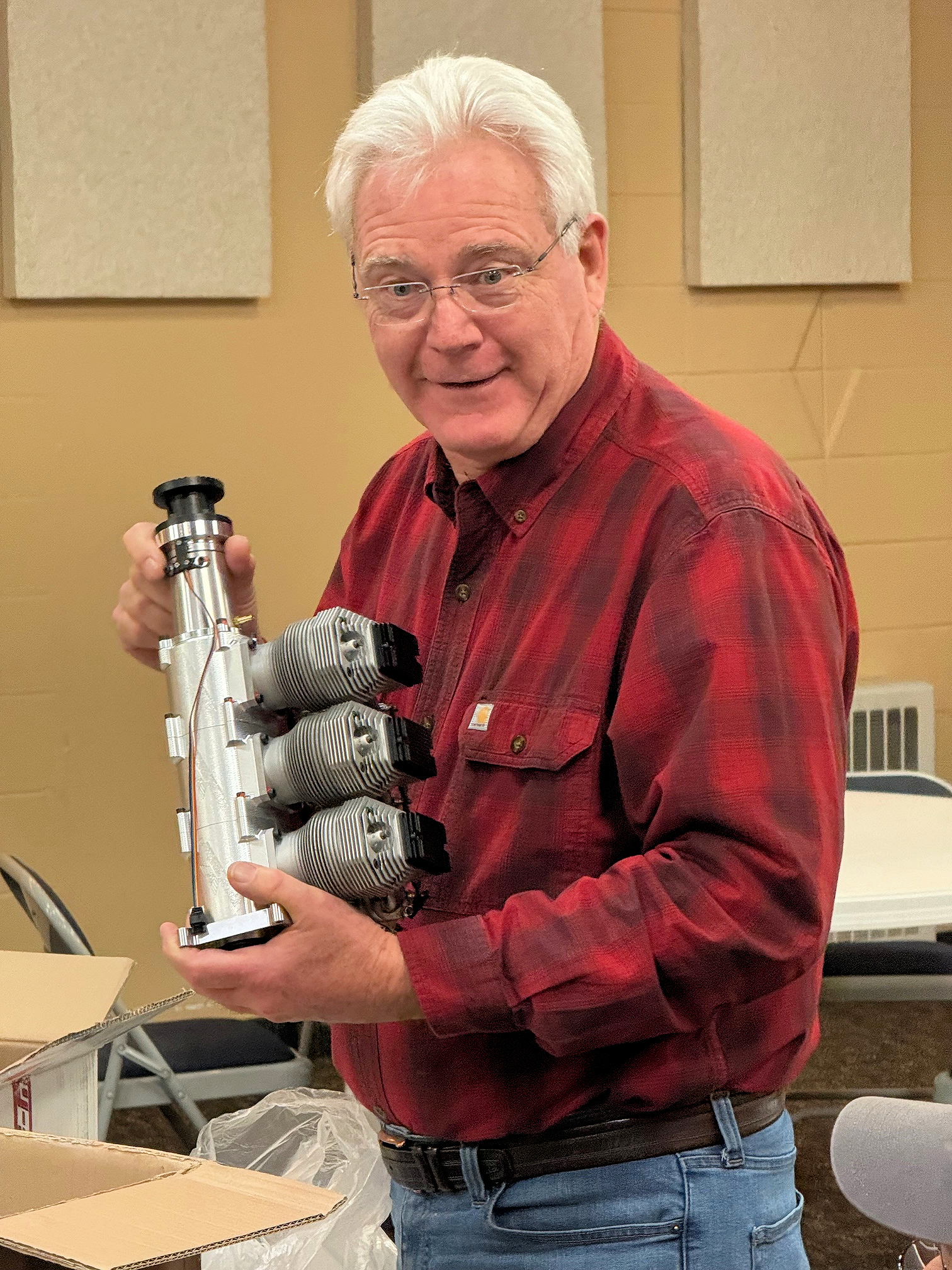
Last December Dennis
had brought in his 3 cylinder in-line
Kolm IL150 4-stroke engine (previously
mis-reported as a ROTOmotor 130cc) for
use in his CARF-Models Supermarine
Spitfire Mk. IX.
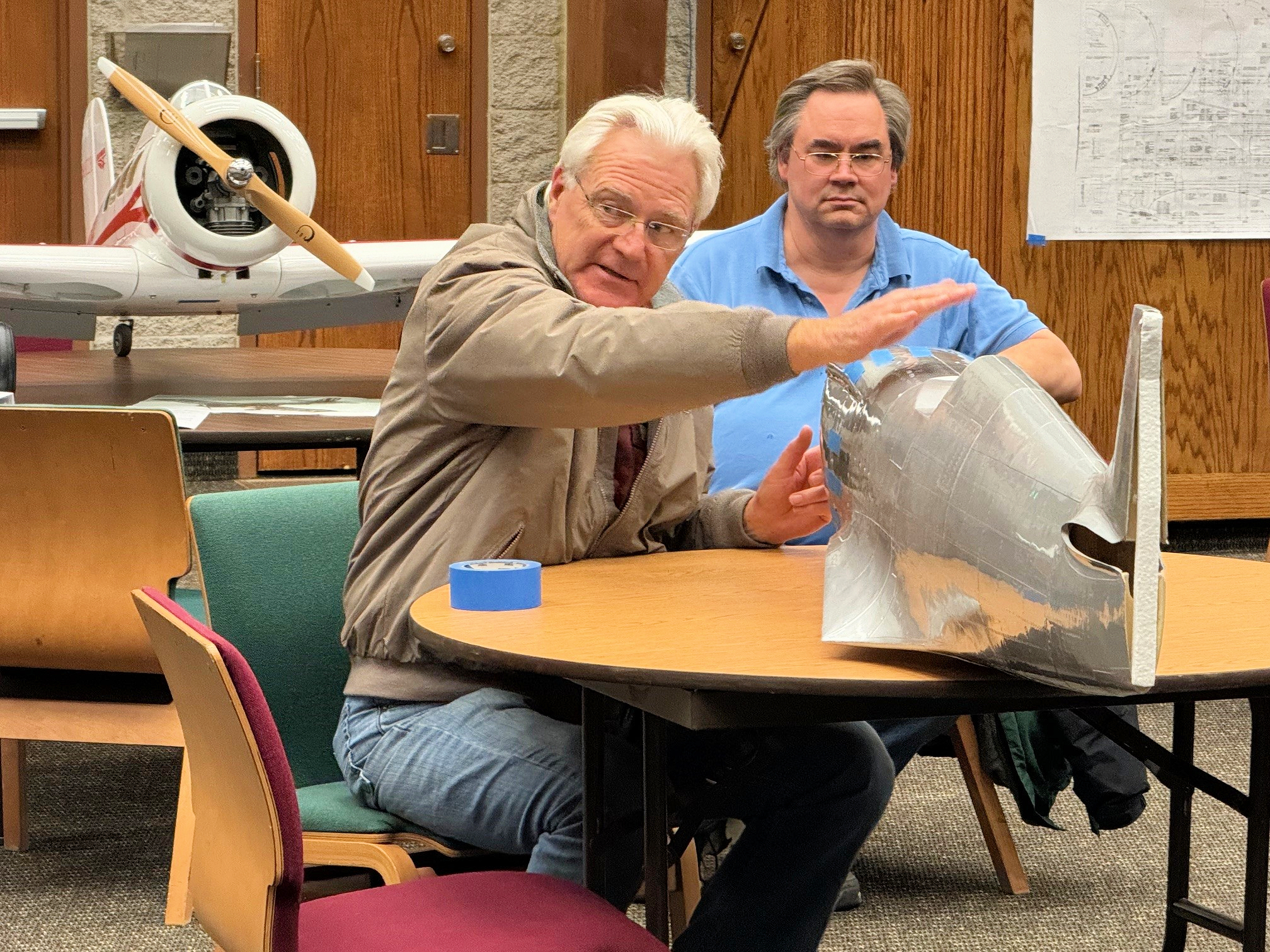
Dennis is looking
for support from previous builders on
how to mount the Kolm in the fuselage.
The fuselage is a beautiful composite
structure with no internal bulkheads.
The original kit is set up for a DA-85
with a canister muffler. The use
of the multi-cylinder in-line requires
that the firewall be removed and
relocated further back to near the wing.
|
|
CARF-Models
1:4.2 Scale Spitfire Specifications:
-
Wingspan: 102” (2.58m)
-
Fuselage
length: 88” (2.24m)
-
Power:
Using a Kolm IL150-LE
-
Estimated
Weight: 38lbs (17
kg)
|
|
He's thinking of
assembling the engine and mounting
system to an unattached firewall to
determine the mounting location.
The best news is that
he most likely will not have to add
weight to the nose to get the Spitfire
to balance.
Dennis is looking to
modify the Spitfire’s outline to make it
more of a Battle of Britain version.
We look forward to
seeing it fly this spring! |
|
|
| |
|
Karl
Hansen’s Lockheed P2V-7 Neptune
Subchaser |
|
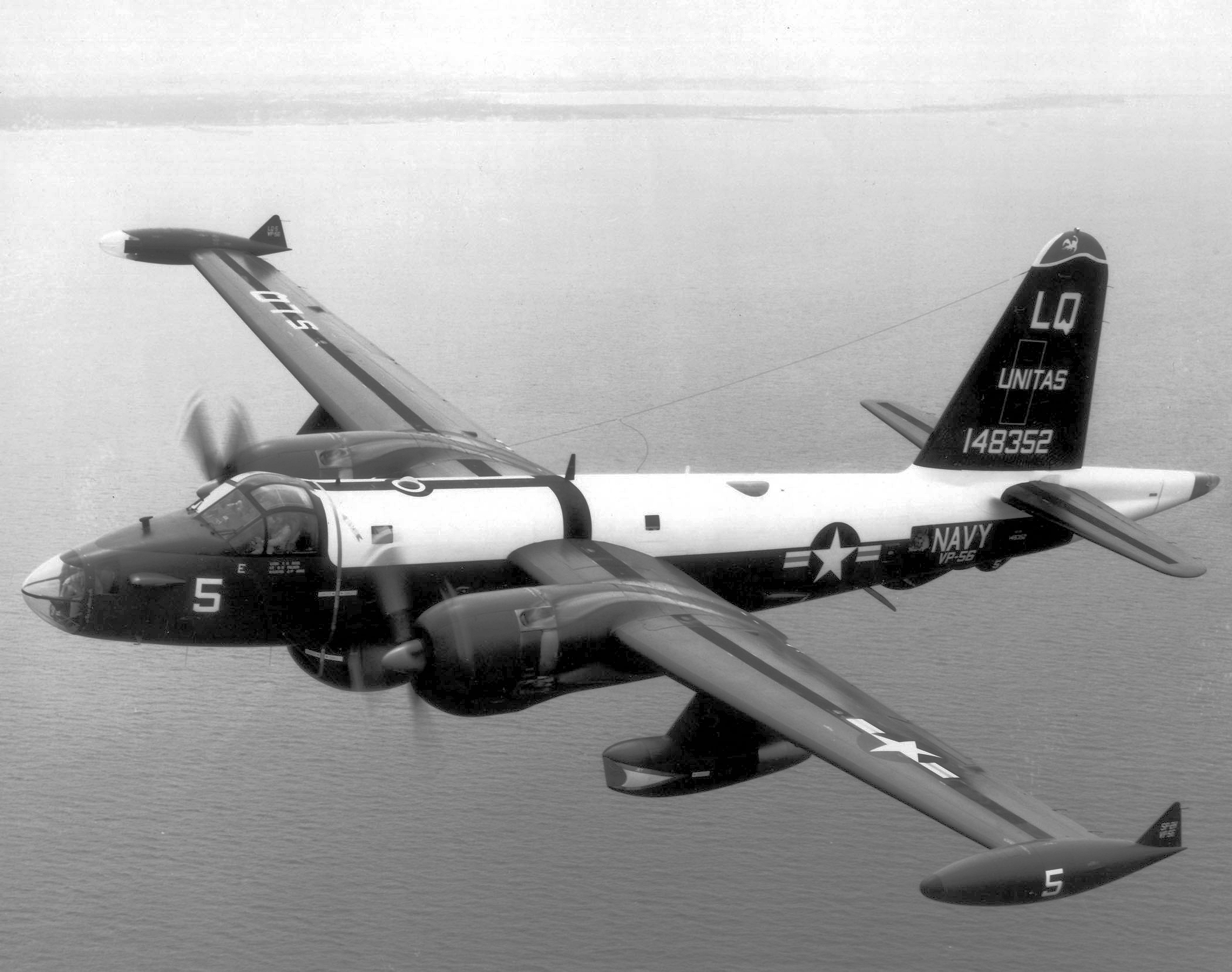
Wow! TWO Lockheed
projects at the same meeting!
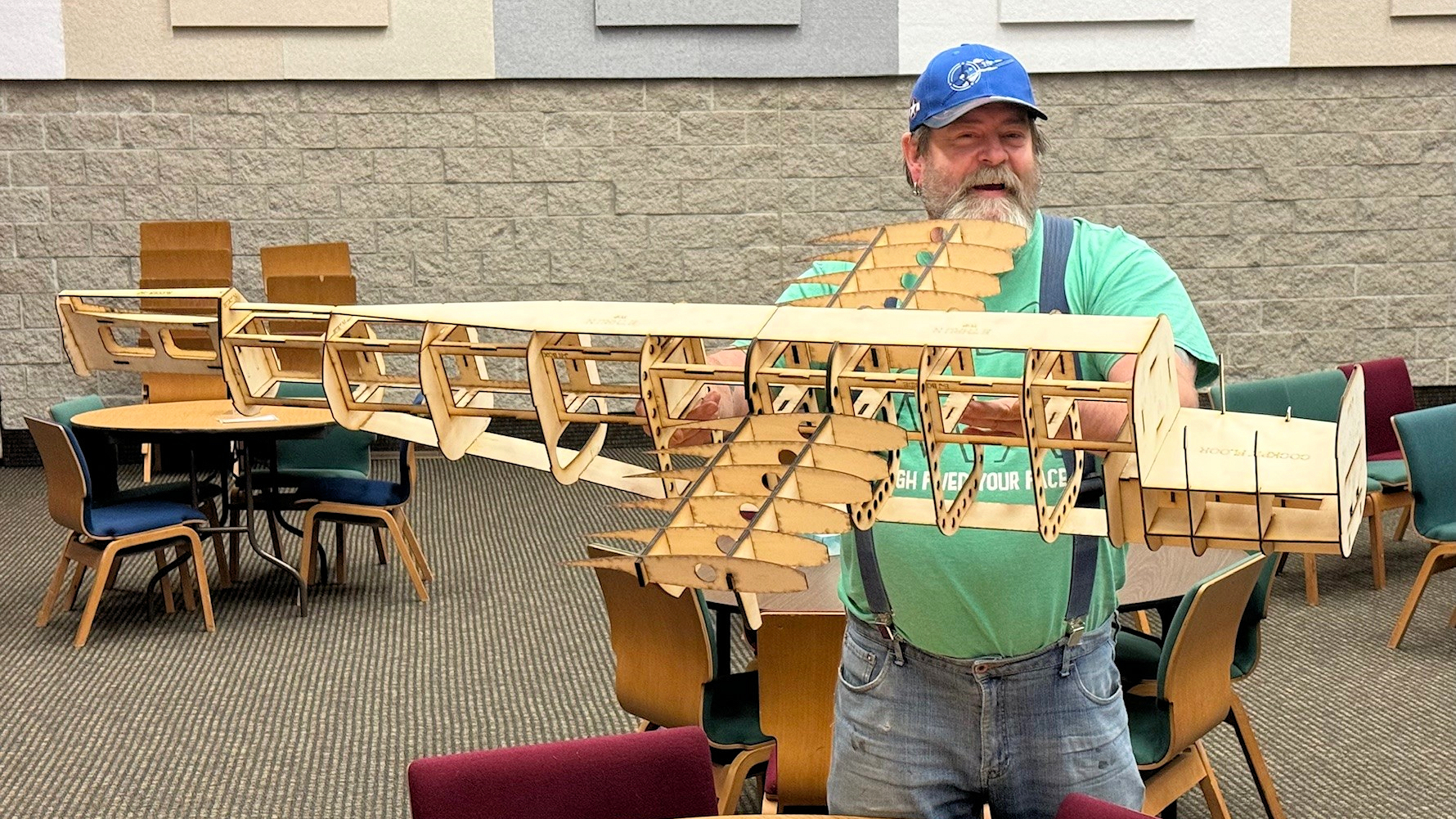
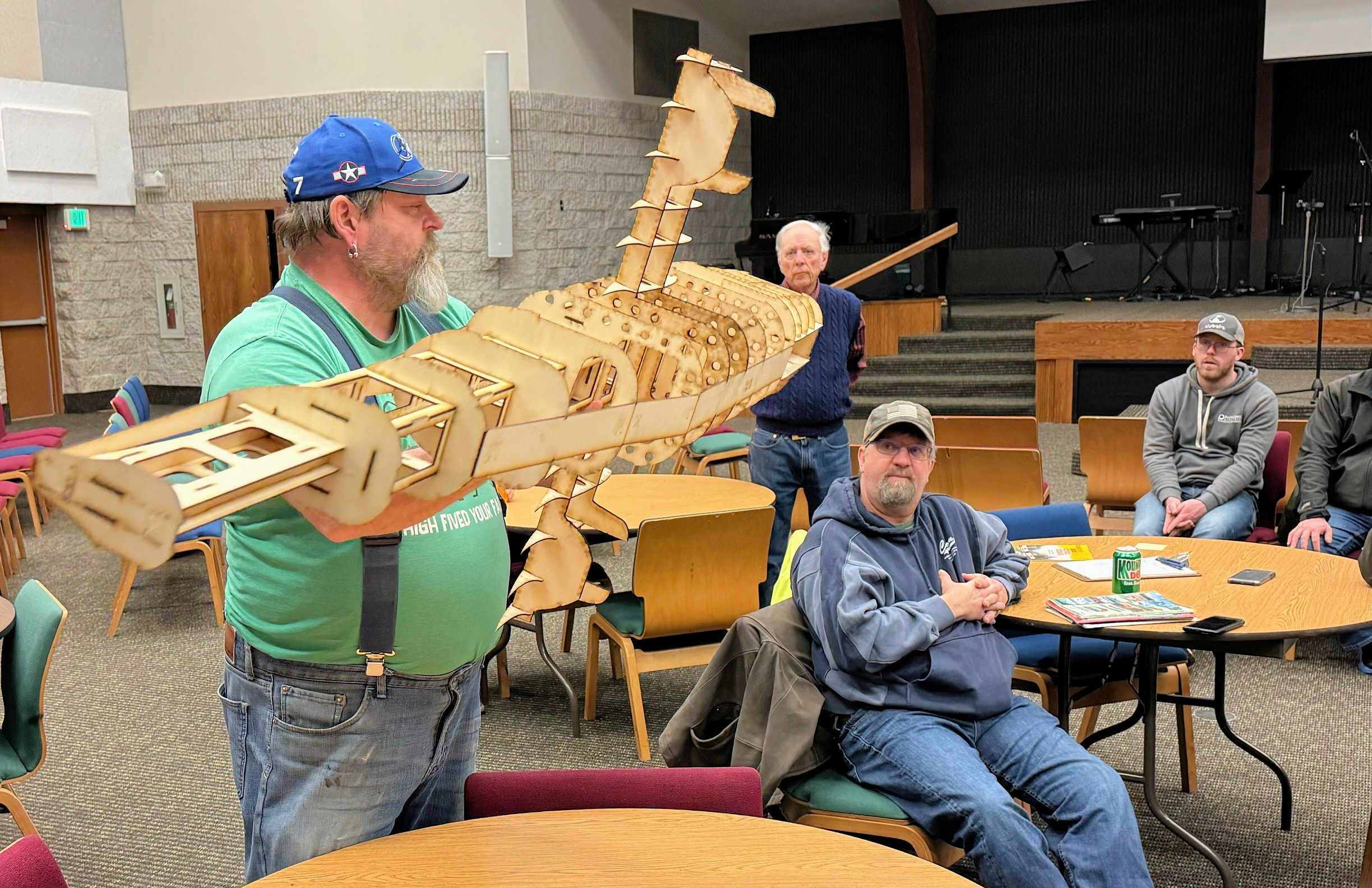
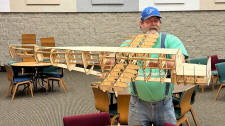
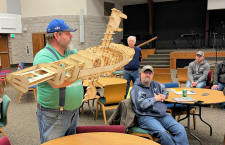
Karl has a new
project. He designed and is
building a 2-engine submarine chaser!
The construction is his typical
interlocking laser cut design allowing
for modules to be simply assembled.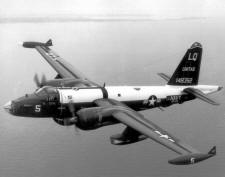
According to
Wikipedia: “The Lockheed P-2
Neptune (designated P2V by the United
States Navy prior to September 1962) is
a maritime patrol, anti-submarine
warfare (ASW) aircraft.
It was developed for
the US Navy by Lockheed to replace
the Lockheed PV-1 Ventura and PV-2
Harpoon
 and
was replaced in turn by the Lockheed P-3
Orion. Designed as a land-based
aircraft, the Neptune never made a
carrier landing, but a small number were
converted and deployed as
carrier-launched (using JATO assist),
stop-gap nuclear bombers that would have
to land on shore or ditch. The
type was successful in export, and saw
service with several armed forces.” and
was replaced in turn by the Lockheed P-3
Orion. Designed as a land-based
aircraft, the Neptune never made a
carrier landing, but a small number were
converted and deployed as
carrier-launched (using JATO assist),
stop-gap nuclear bombers that would have
to land on shore or ditch. The
type was successful in export, and saw
service with several armed forces.” |
|
Lockheed P-3
Orion 1/12th Scale Specifications
- Wingspan:
104” (2.64m)
- Fuselage
length: 89” (2.26m)
- Power:
considering (2) 20 cc gas
|
 |
Karl plans to take
his aircraft to the Warbird & Classics
Events this summer! He may choose
to kit the P2V-7 if there is enough
interest.
We look forward to
seeing it fly this summer! |
| |
|
Scott
Anderson’s CMP F4U-1A Corsair |
|
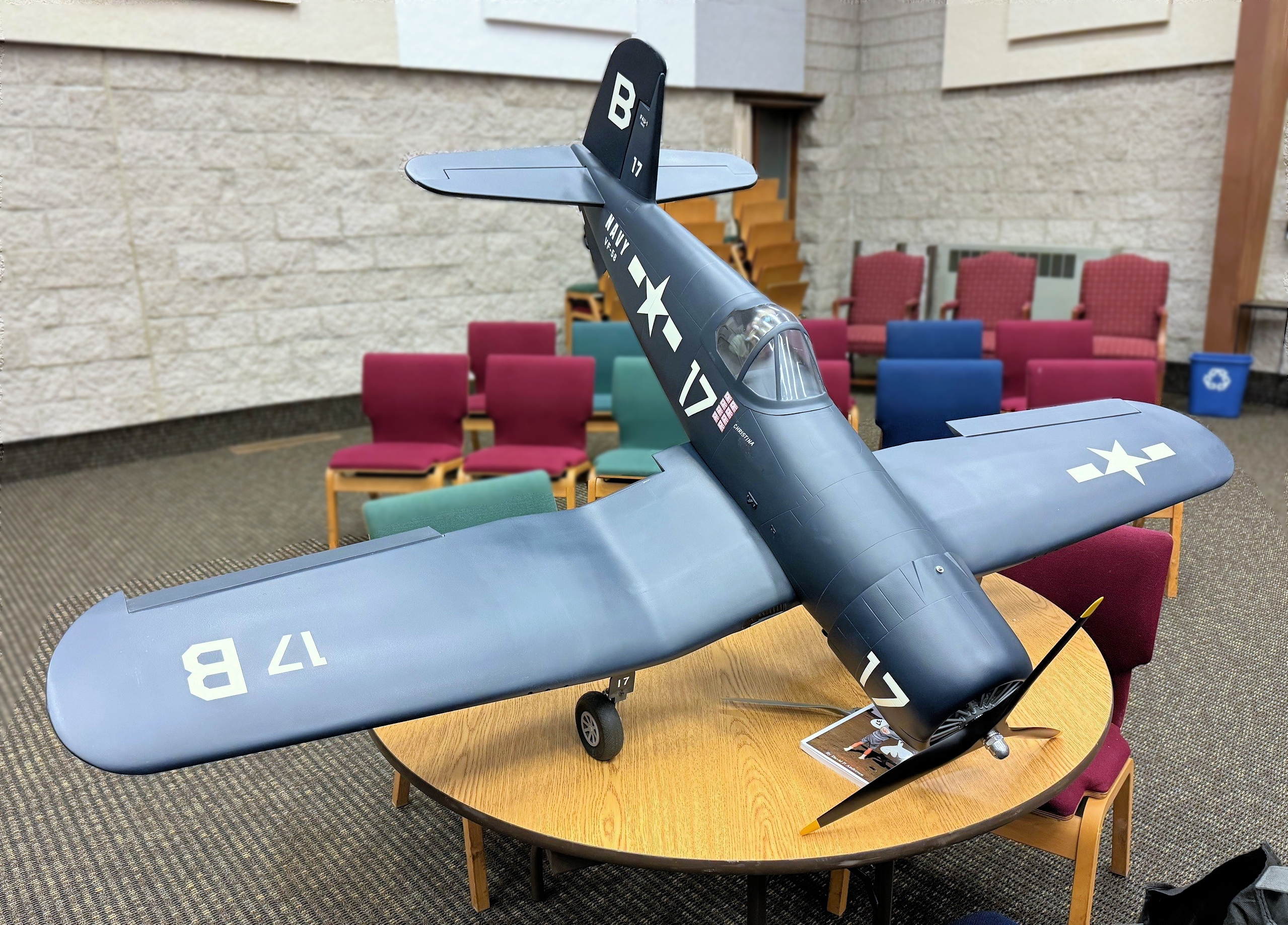
Scott showed his
auction find from the TCRC 2024 Auction.
The model is a China Model Products (CMP)
F4U-1A
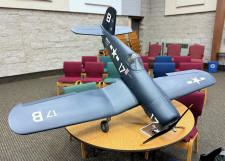 Corsair.
The model was built as fixed gear with
Robart scale Oleo Struts. It is
electric powered with a RimFire 1.20
motor, 100A ESC-BEC and uses a 6s-4000
battery. Corsair.
The model was built as fixed gear with
Robart scale Oleo Struts. It is
electric powered with a RimFire 1.20
motor, 100A ESC-BEC and uses a 6s-4000
battery.
The model was
painted with epoxy KlassKote paint over
the composite airframe. |
|
CMP Models
F4U-1A Corsair 1/5th Scale
Specifications:
-
Wingspan:
78” (1.98m)
-
Fuselage
length:
68” (1.73m)
-
Power:
RimFire 1.20 motor w/100A ESC
-
Estimated
Weight: planning 12lbs
(5.5 kg)
|
Our
next meeting will be Friday March
22, 2024. |
|
Andersen Designs & Scale Flyers
Highlighted |
|
Once again we
were honored to have David
Andersen Designs and the
Scale Flyers Website highlighte d
in the Scale Aircraft section of the
2024 March Model Aviation Magazine. d
in the Scale Aircraft section of the
2024 March Model Aviation Magazine.
Considering we
are just a bunch of nerds who enjoy
building and flying Scale Aircraft,
it's an wonderful to have thousands of
visitors from all over the world who
are interested in model aviation
stop in each month to see what we're
up to.
Although not
always covered in our N ewsletters,
we encourage all of you to pass on
your acquired building knowledge and
flying skills to individuals of all
ages. As important are safety
basics and flying procedures to
further ensure our hobby continues
to flourish well into the future!
Model Aviation
Magazine please except a
BIG THANK YOU ... from all SFM
Members. |
| |
|
Ron
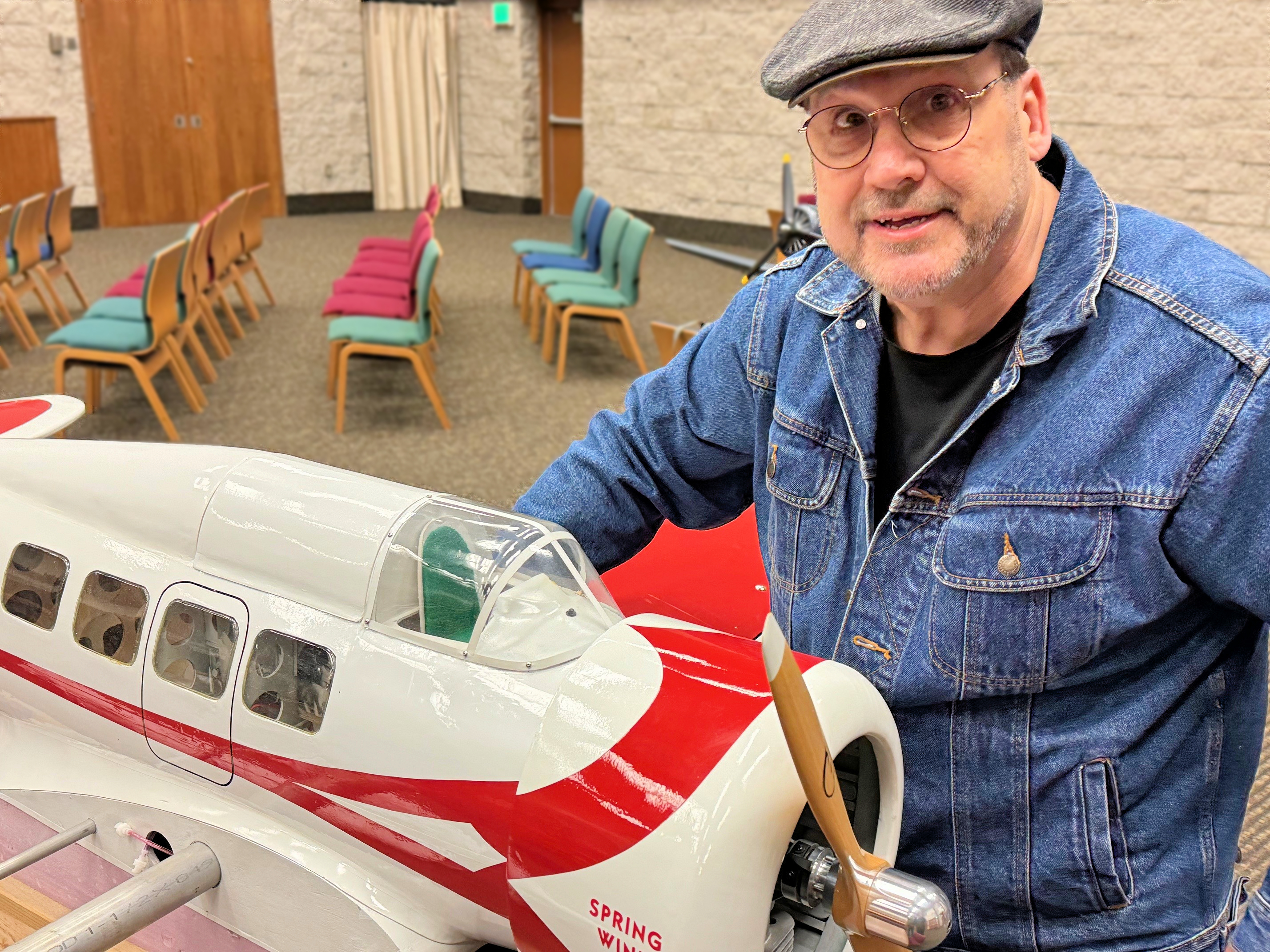
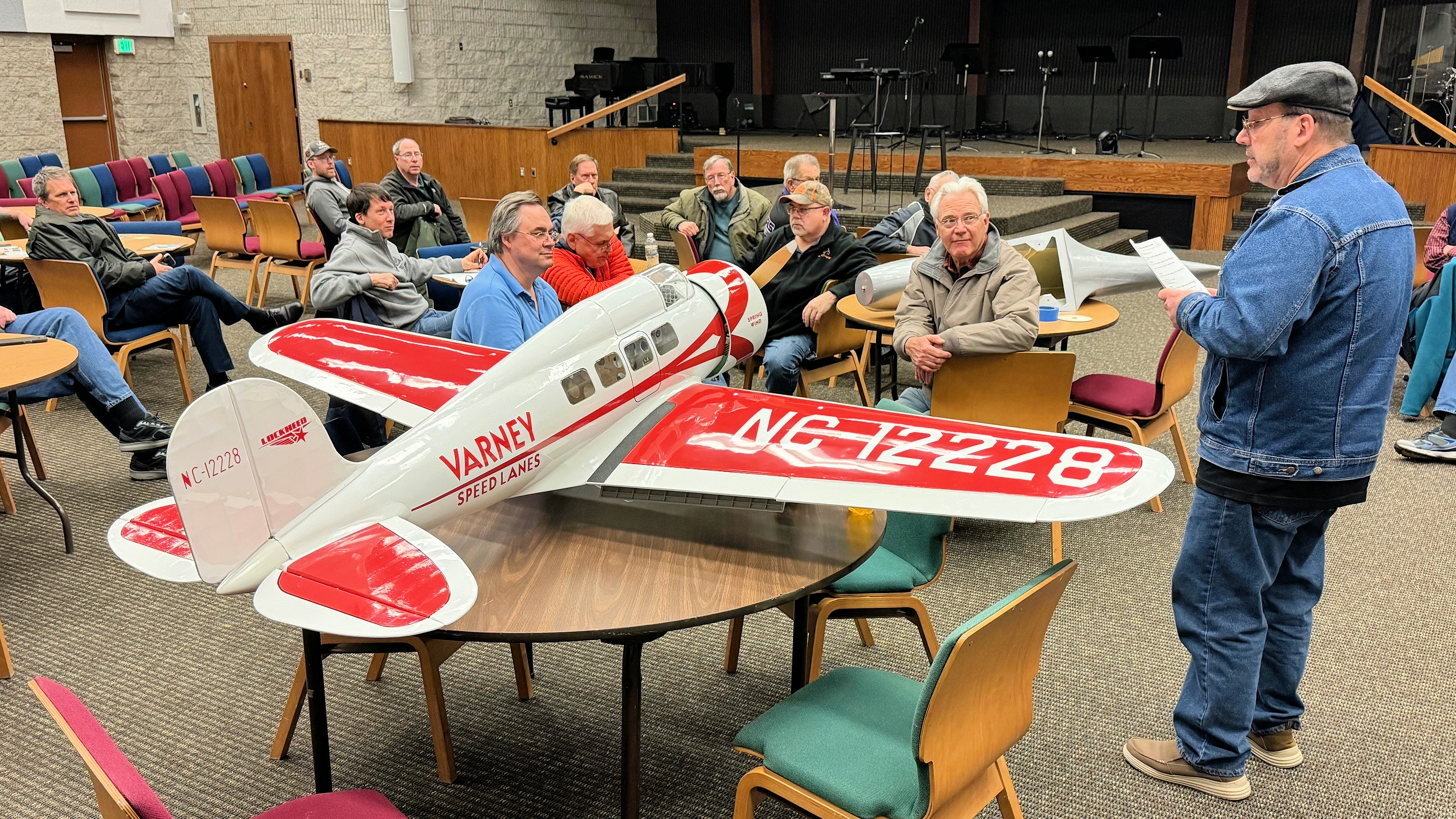
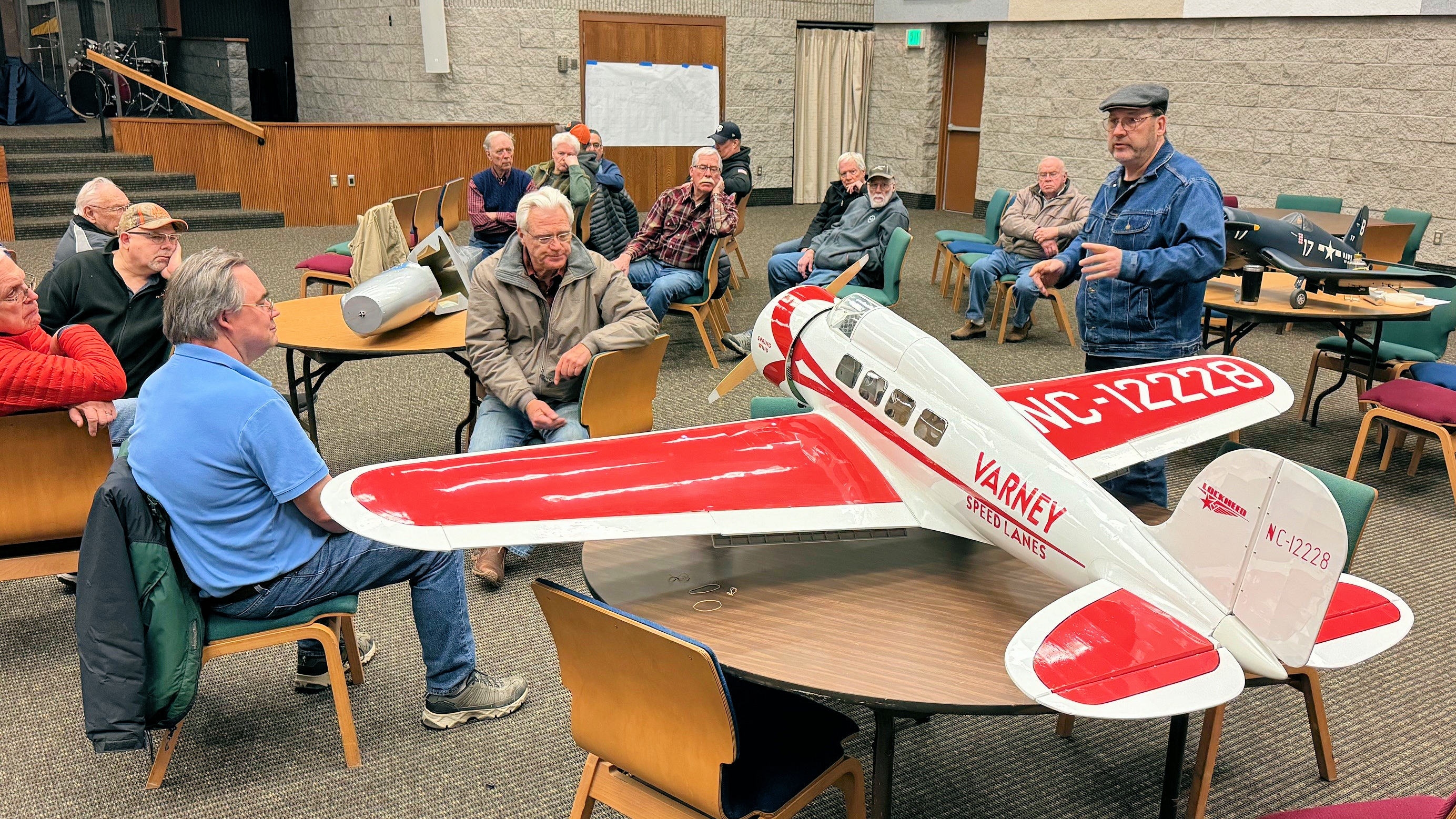
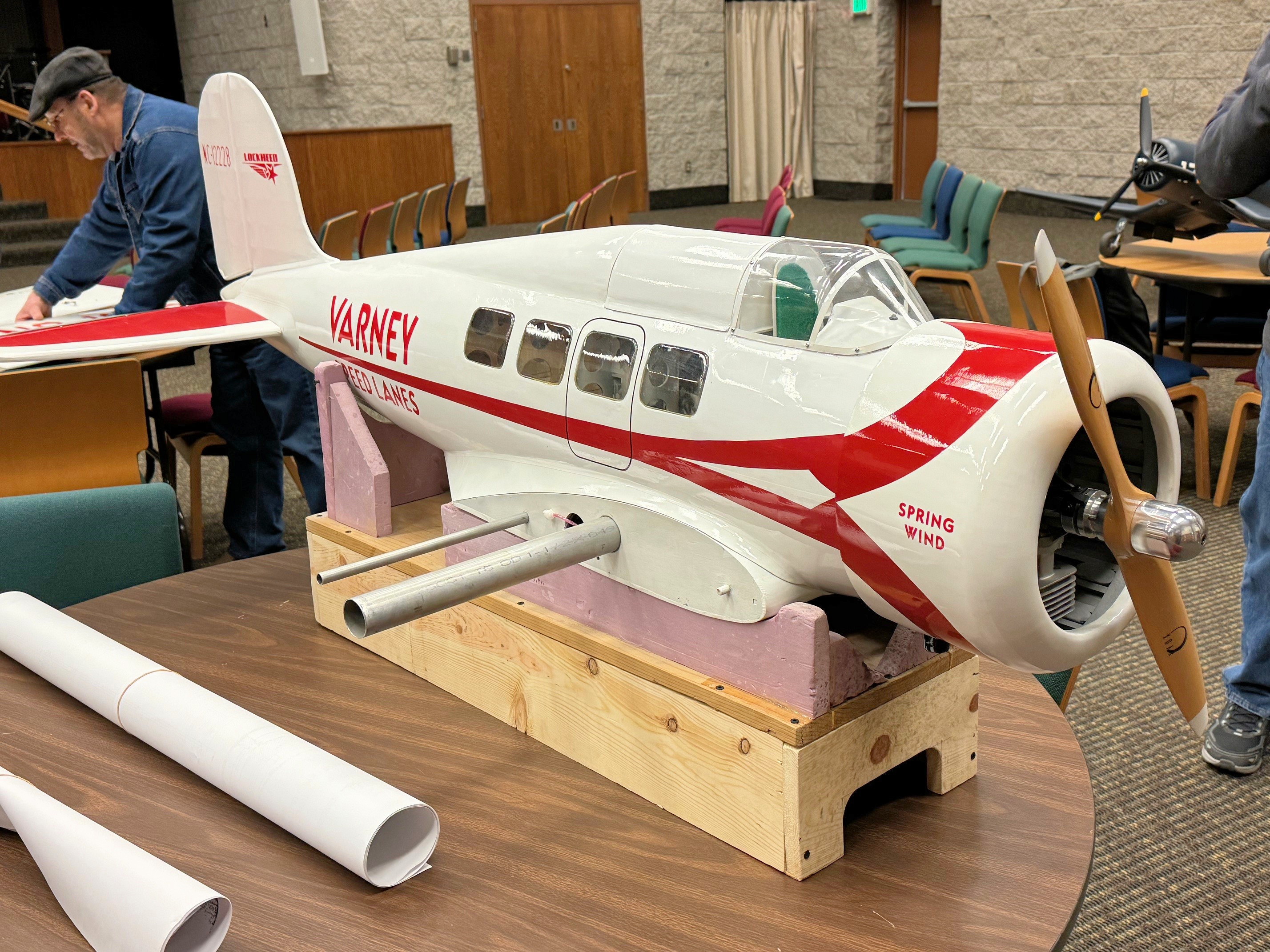
Jesberg’s Lockheed Model 9 Orion
Project |
|
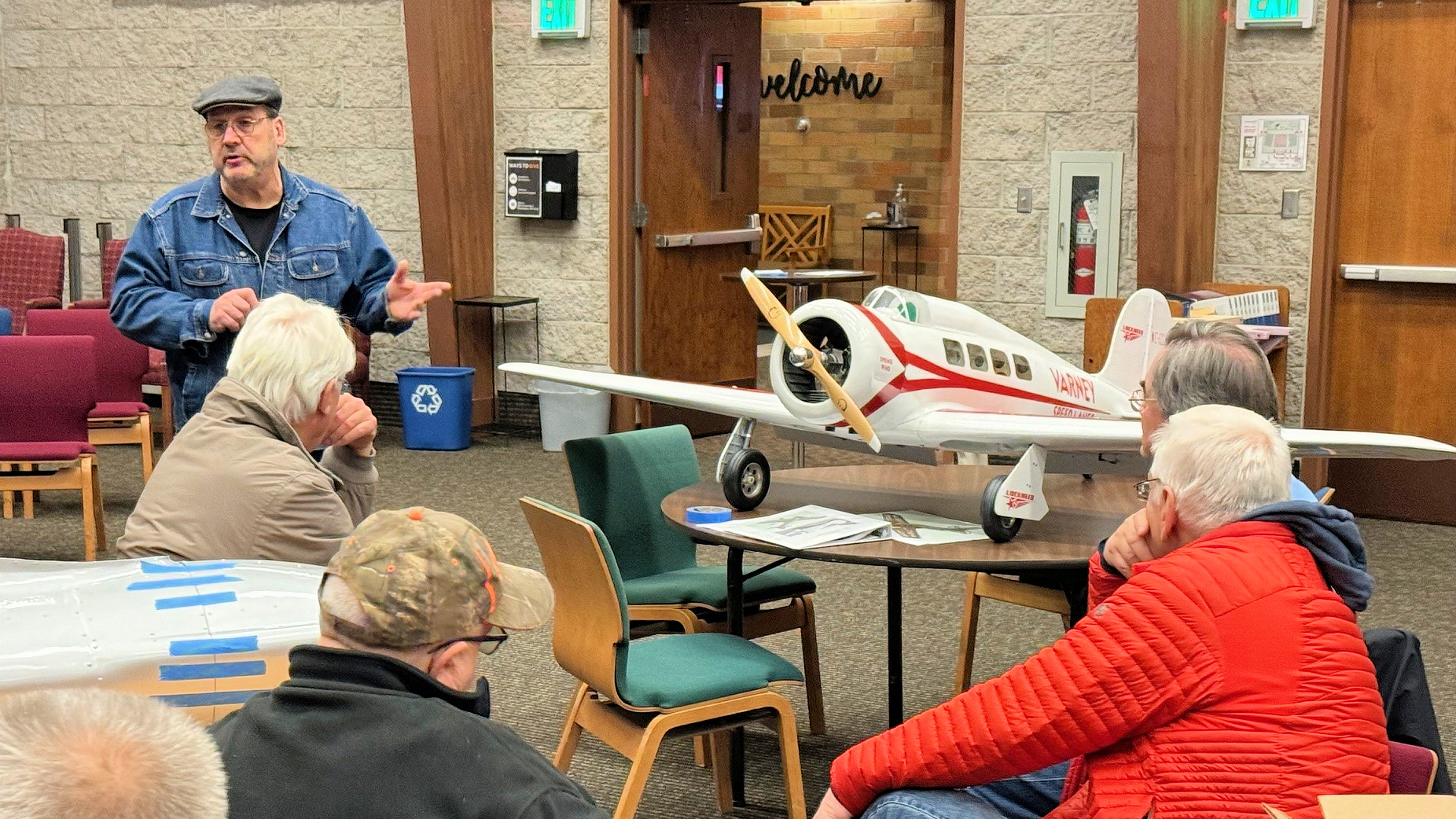
According to Wikipedia:
“The Lockheed Model 9 Orion is a
single-engine passenger
aircraft built in 1931 for
commercial airlines. It was
faster than any American military
aircraf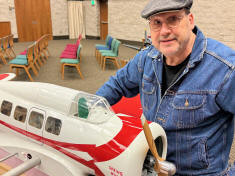 t of that time. In fact
an earlier designed single seat
version beat Howard Hughes' H1 in
the transatlantic races in 1929.
Designed by Richard A. von Hake, it
was the last wood aircraft produced
by the Lockheed Aircraft
Corporation.” t of that time. In fact
an earlier designed single seat
version beat Howard Hughes' H1 in
the transatlantic races in 1929.
Designed by Richard A. von Hake, it
was the last wood aircraft produced
by the Lockheed Aircraft
Corporation.”
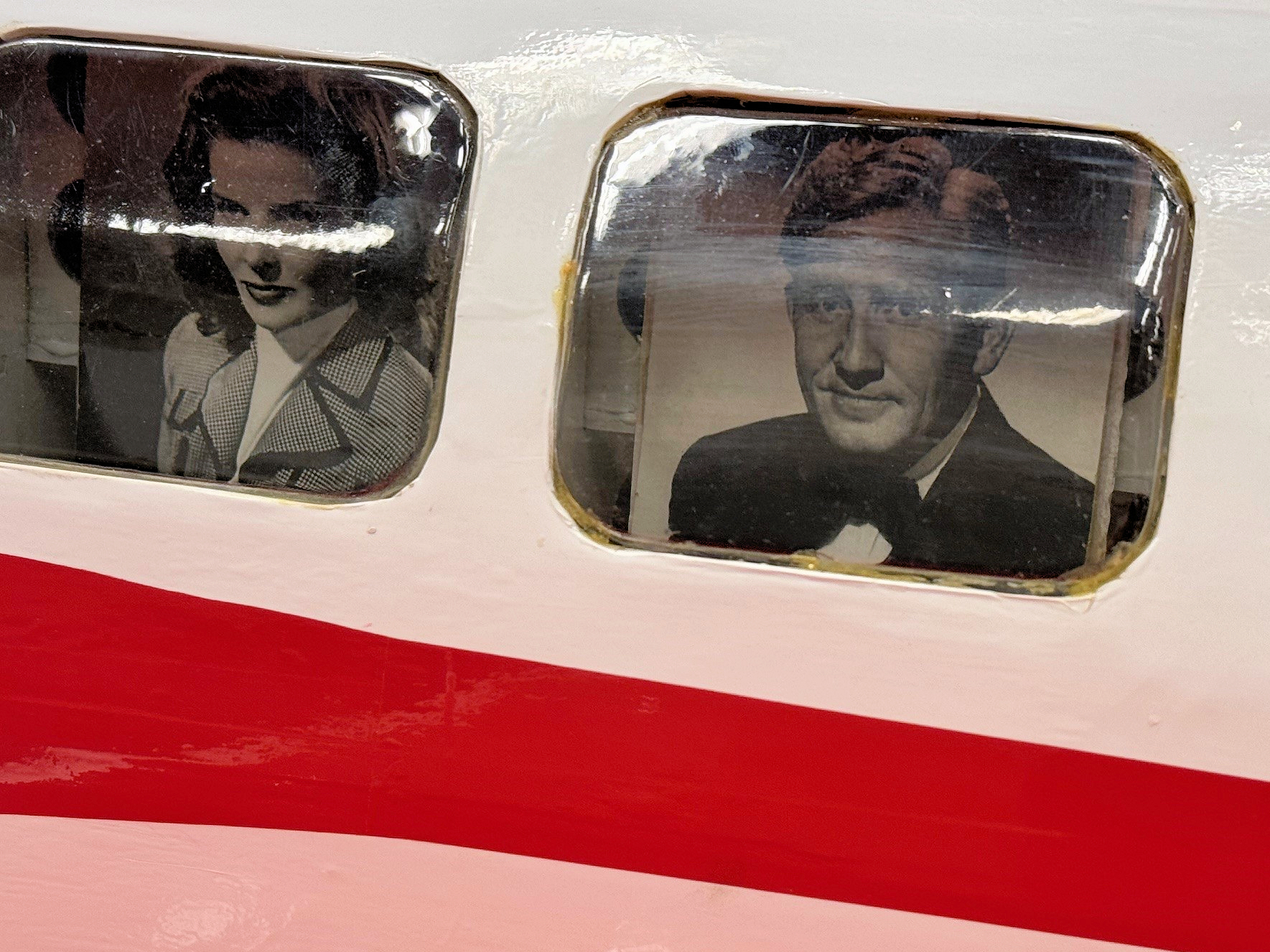
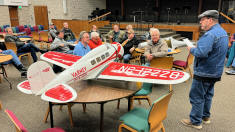
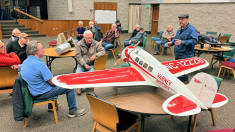
Ron joined the
Scale Flyers of Minnesota in January
2024 and at this meeting Ron brought
his Lockheed Model 9 Orion Project
that he researched, drew the plans
and built the aircraft. He’s
put in years of work and is looking
for someone to check it out and
perform the maiden flight. It
is an impressive project and looks
to be well built! |
 |
 |
|
Lockheed Model 9
Orion 1/5th Scale Specifications:
|
|
As Ron tells us
...
“I first saw the
Orion in a trade magazine in 1976
and knew right away that I wanted to
model it. Off and on, over
many years I collected pictures and
information on it. In 2015 I
discovered actual shop prints from
the Lockheed factory in Burbank
California, circa 1932. That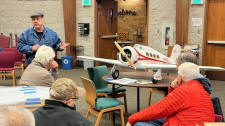 was the find that spurred me to
undertake the project because up
until then I had not been able to
find any drawings I trusted.
was the find that spurred me to
undertake the project because up
until then I had not been able to
find any drawings I trusted.
Many years of
kits and a few scratch builds made
me confident I could do a
large-scale model. I am a
manufacturing engineer for an
aerospace company, so my CAD and
technical skills enabled me to model
this aircraft. I sent the CAD
files to a laser cutter. The
plane is all balsa and ply including
the cowl. I made molds for the
windshield and windows. I created
all the graphics in CAD and had them
cut by a vinyl cutter.”
There was some
discussion about baffling the engine
to ensure adequate cooling as well
as the possibility of adding dummy
engine detail in the future.
We look forward
to the maiden flight this spring! |
| |
|
Chris
Launer’s Weapon Load for F35 Jet
Fighter |
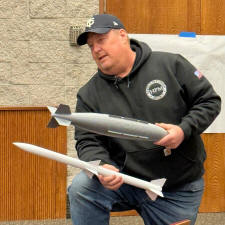 |
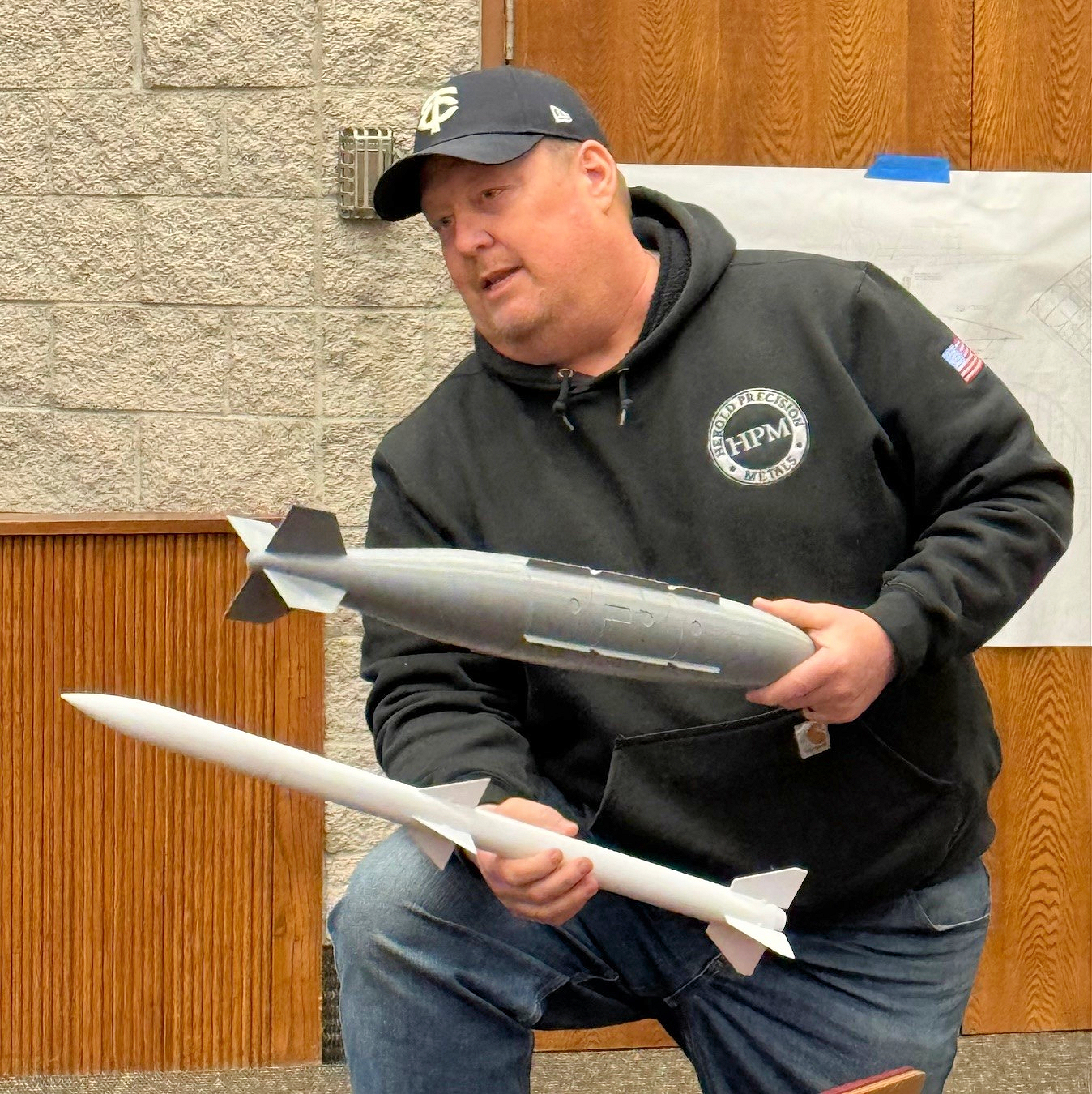
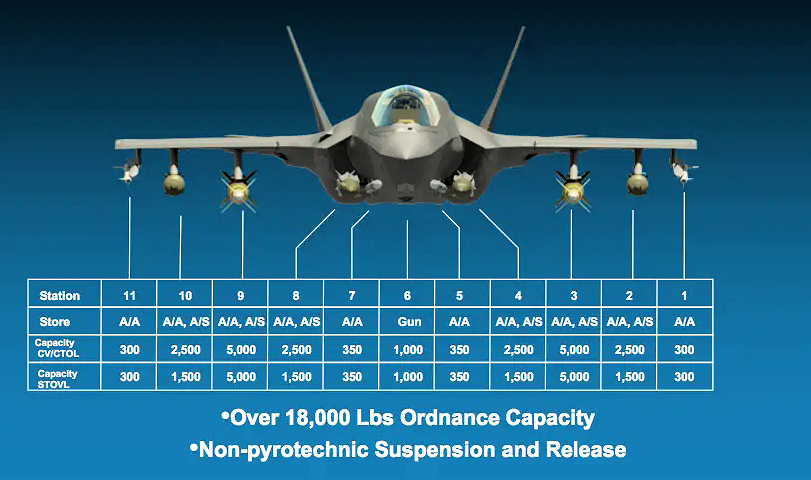
Chris showed a
set of weapons built-up for the F-35
Lightning Jet Fighter built for Mike
Danielson.
They are intended
to fit in the weapons bay that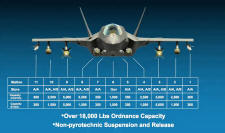 can be opened in flight for display
or launch!
can be opened in flight for display
or launch!
We all are
looking forward to seeing it fly
this spring! |
|