|
Cal
Branton’s ¼ Scale Maachi C.200 Project |
|
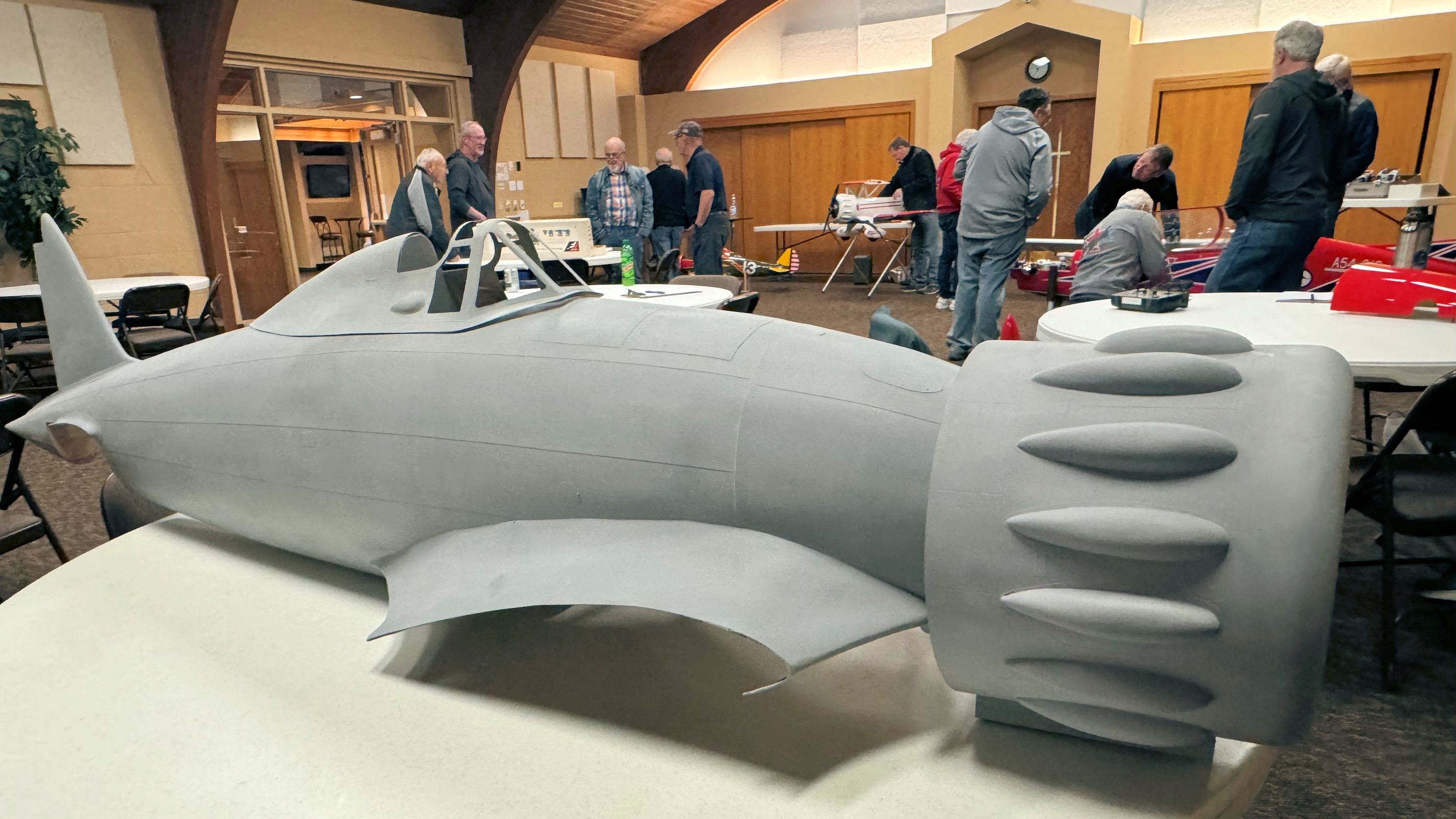
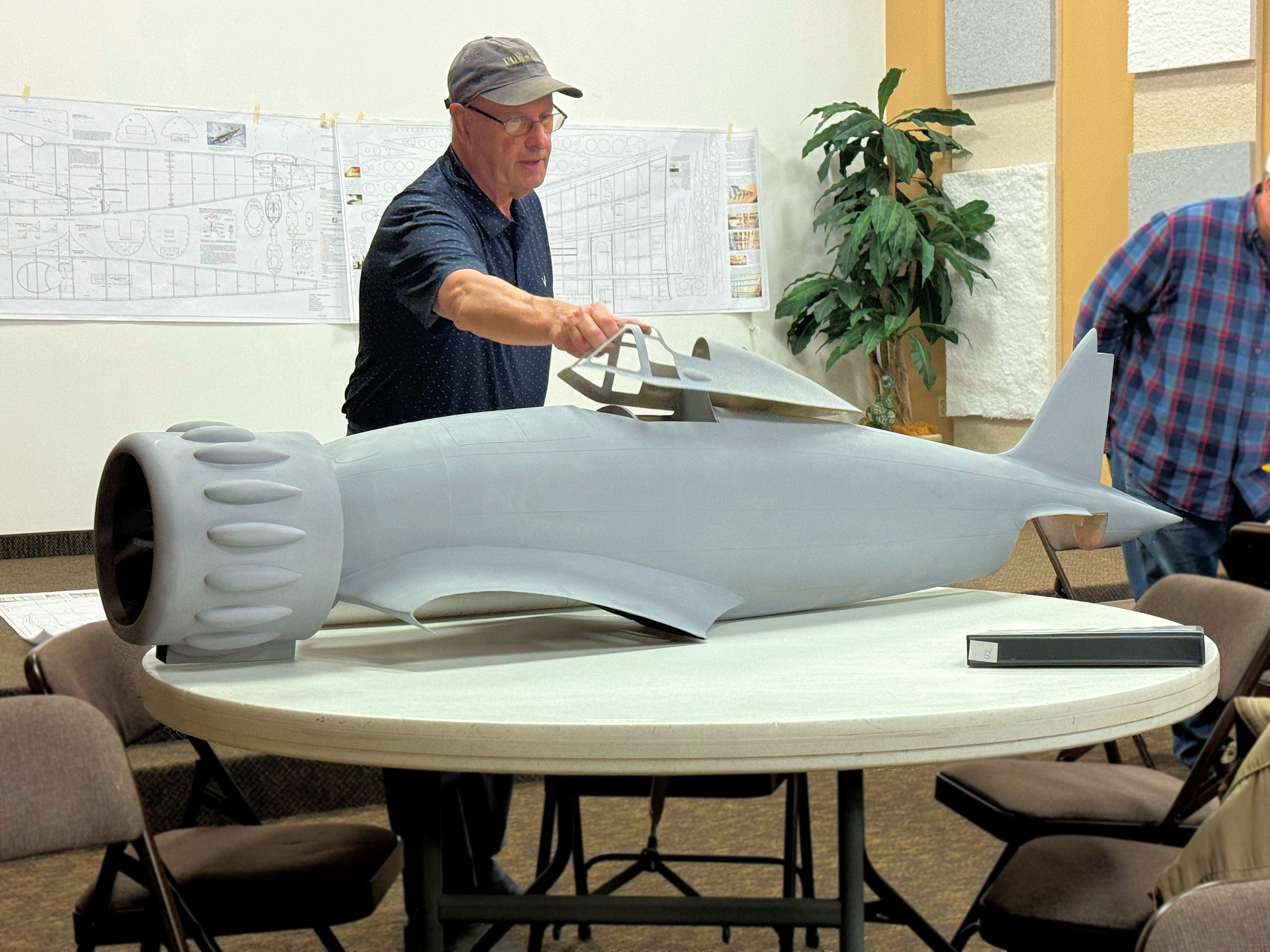
Cal brought in the
beautiful fiberglass fuselage of
David P. Andersen’s ¼ Scale Maachi
C.200 that he had received from Jeff
Micko of Micko Aircraft & Accessories. |
|
 This
sexy
fuselage is well detailed with panel
lines, rivets and access panels molded
into the fiberglass. This
sexy
fuselage is well detailed with panel
lines, rivets and access panels molded
into the fiberglass.
This example came
with bulkheads installed and already
covered in primer. The canopy/headrest
is molded as a separate piece that can
be used as an access hatch. As Cal
has already built-up the wing and tail
surfaces, he expects the Maachi C.200
will be ready for its maiden flight in
early June of 2024. |
| |
|
Mike
Davis’ ¼ Scale WACO YMF-5 Project |
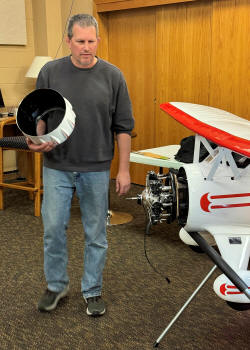 |
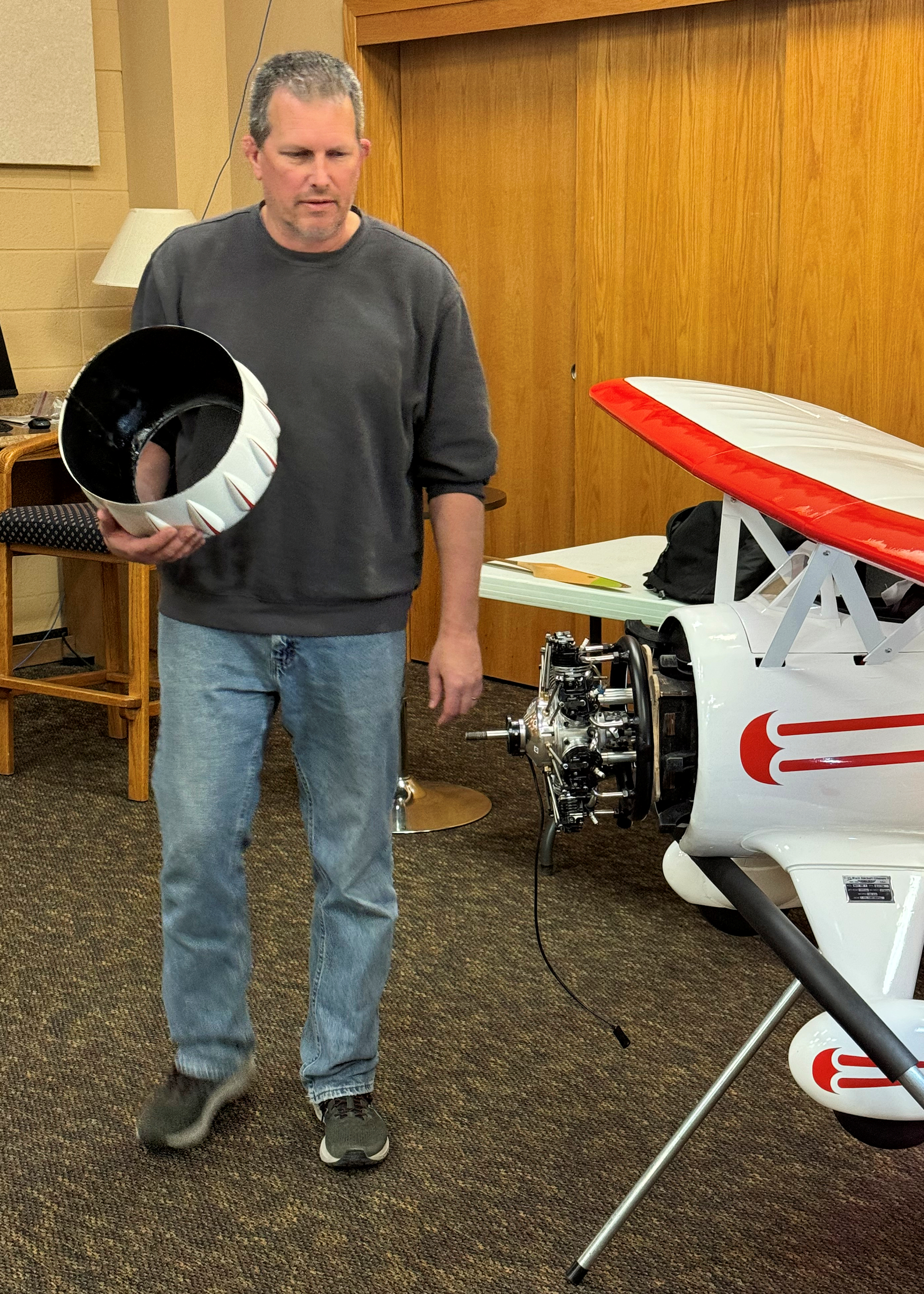
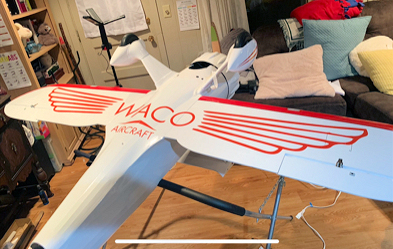
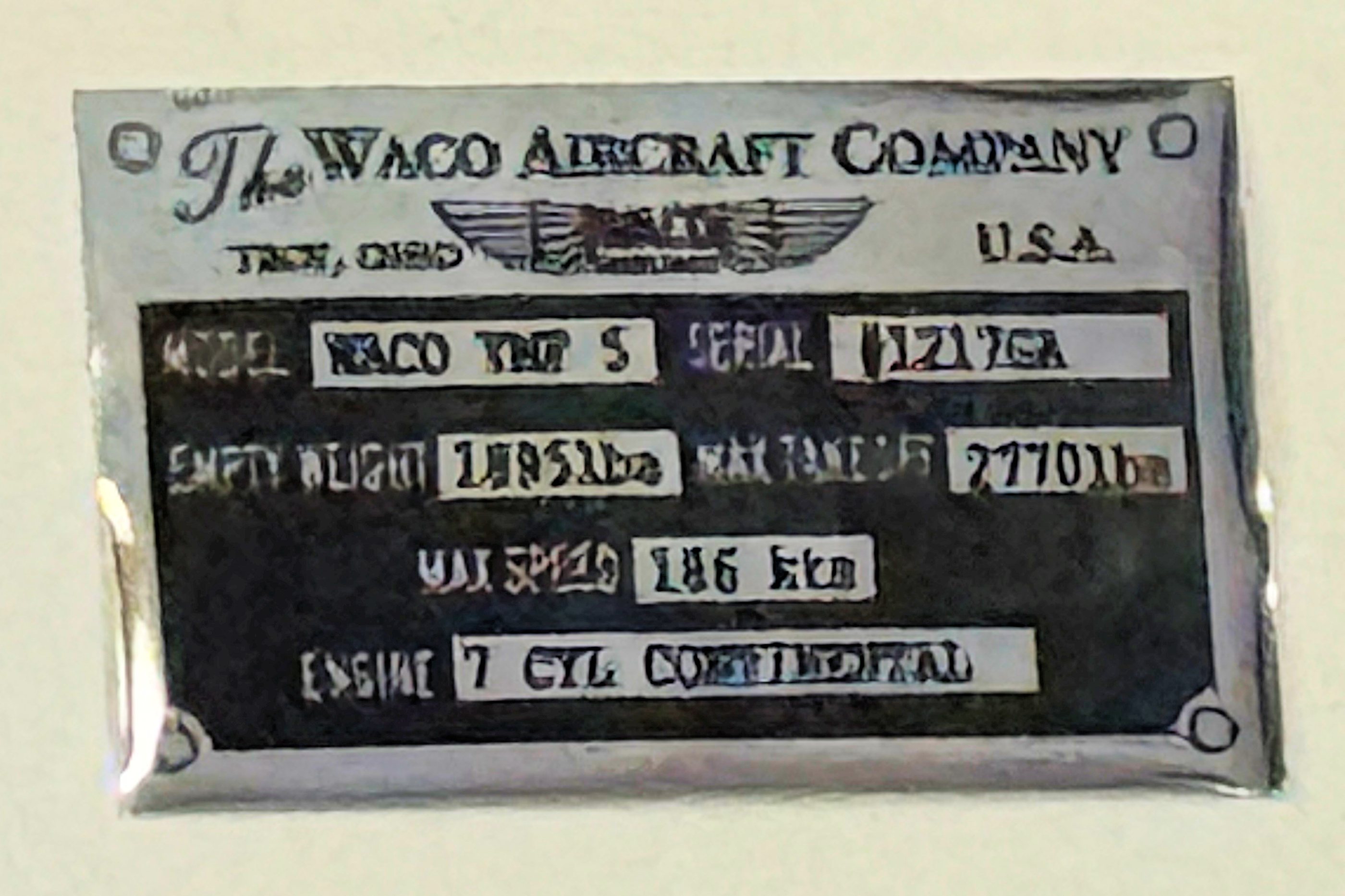
Mike shared his
scaled-up Phoenix Models Weaver Aircraft
Co. YMF-5 (WACO) project that is
nearing completion.
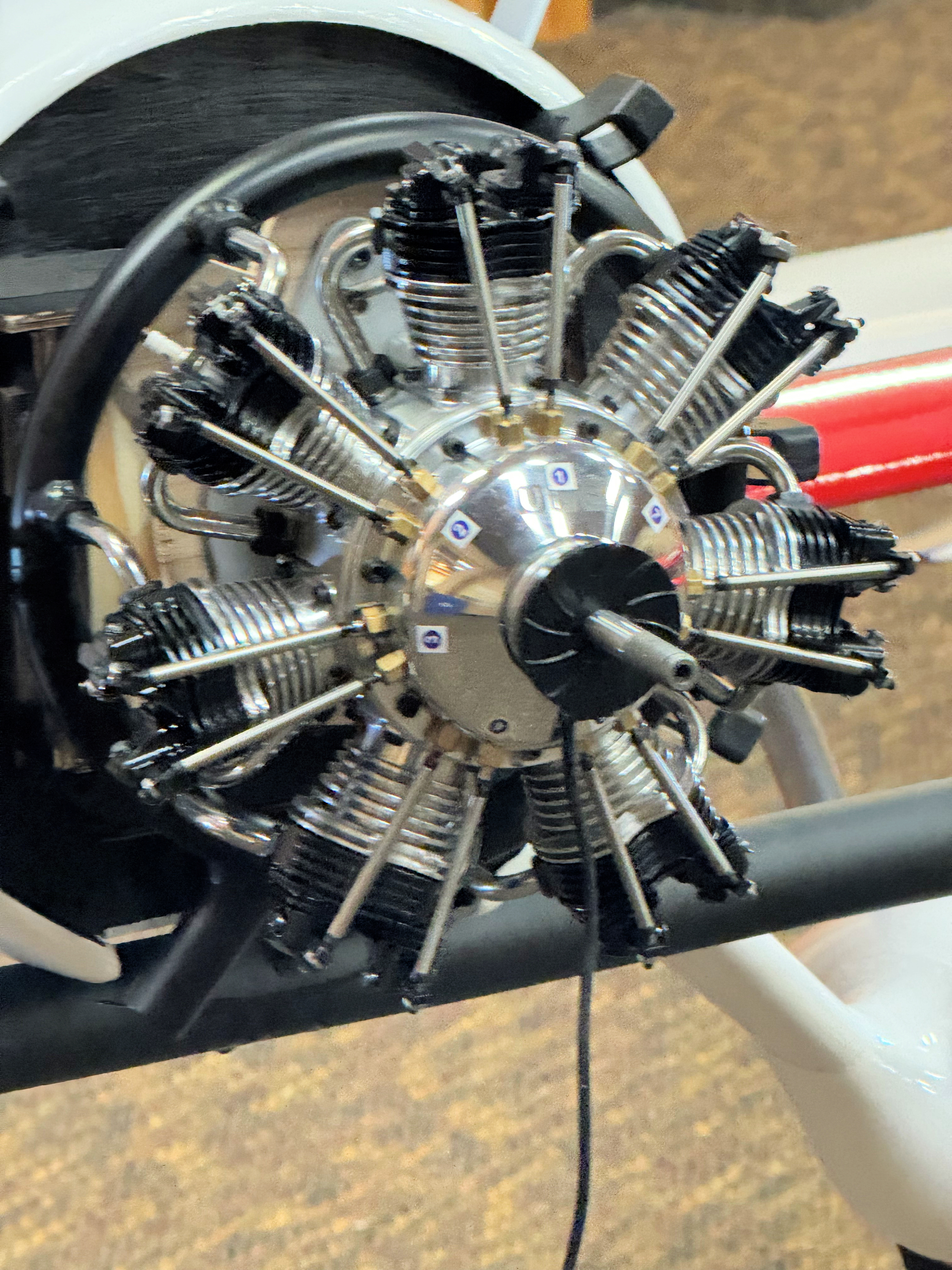
It is a Phoenix
Models ARF that was sold by Tower
Hobbies powered by a UMS-7-90cc 4-stroke
radial from CH Ignitions.
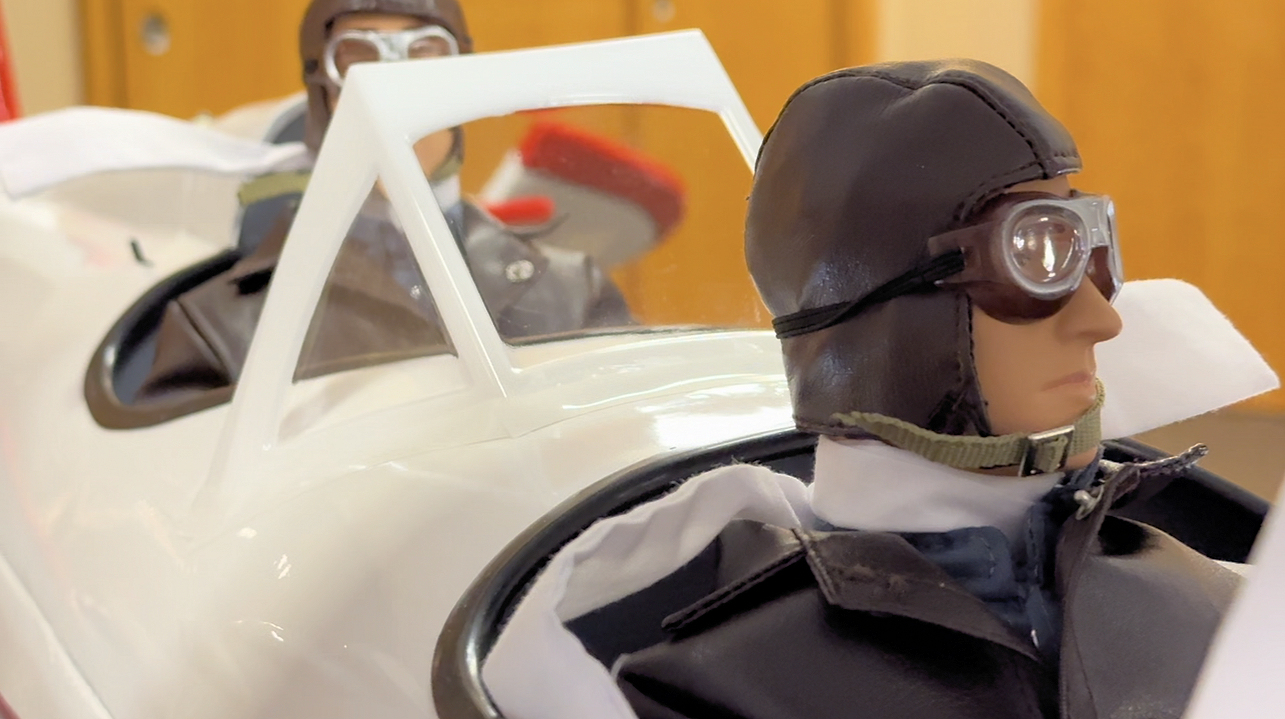
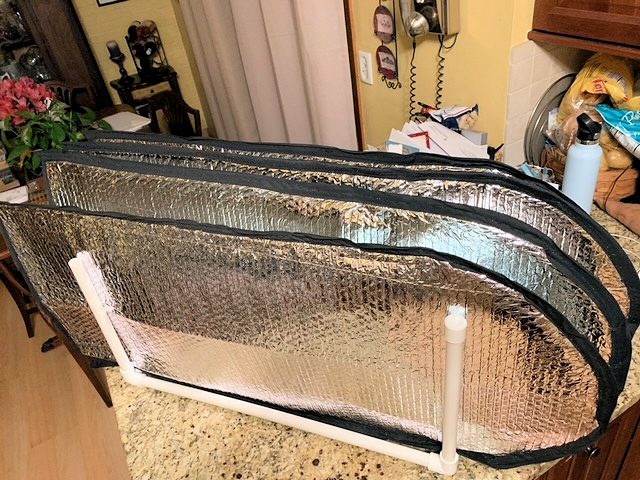
The photos highlight
some of the added scale features in
addition to the nice wing bags made from
HVAC material. |
| |
| |
|
Mike tells us: The plane
was very well packaged for shipping.
The plane came with two painted pilots
but I upgraded them. The construction
and covering is very done for an ARF at
this price point. The hardware
that came with the package is good
quality but some folks would change it
out.
The hardest part of the plane was
attaching the wheel pants and wheel
fairings. The fairings I had to cut
out o f two plastic molds and
glue the three parts of the fairings
and the wheel pants together. This
prevent the ability to
access the wheels, some flyers used
screws to attach the wheel pants and
fairings together to have better access
to the wheels.
Overall, the plane went together well. It's nice to have the wings come apart
into sections for transportation. I
ended up building a wing rack and making
wing covers. For the motor the plane comes with
temples for DLE 61 or OS GT 60. It
also has directions to build it with
electric power. The manual is OK
and comes all white so you can be
creative in finishing the plane.
My Upgrades
Need to complete the
electronics and break-in the motor.
Can't wait to hear the motor. Test
flights early June 2024.
Thanks for the additional info Mike, we
look forward to seeing this bi-plane
fly! |
| |
|
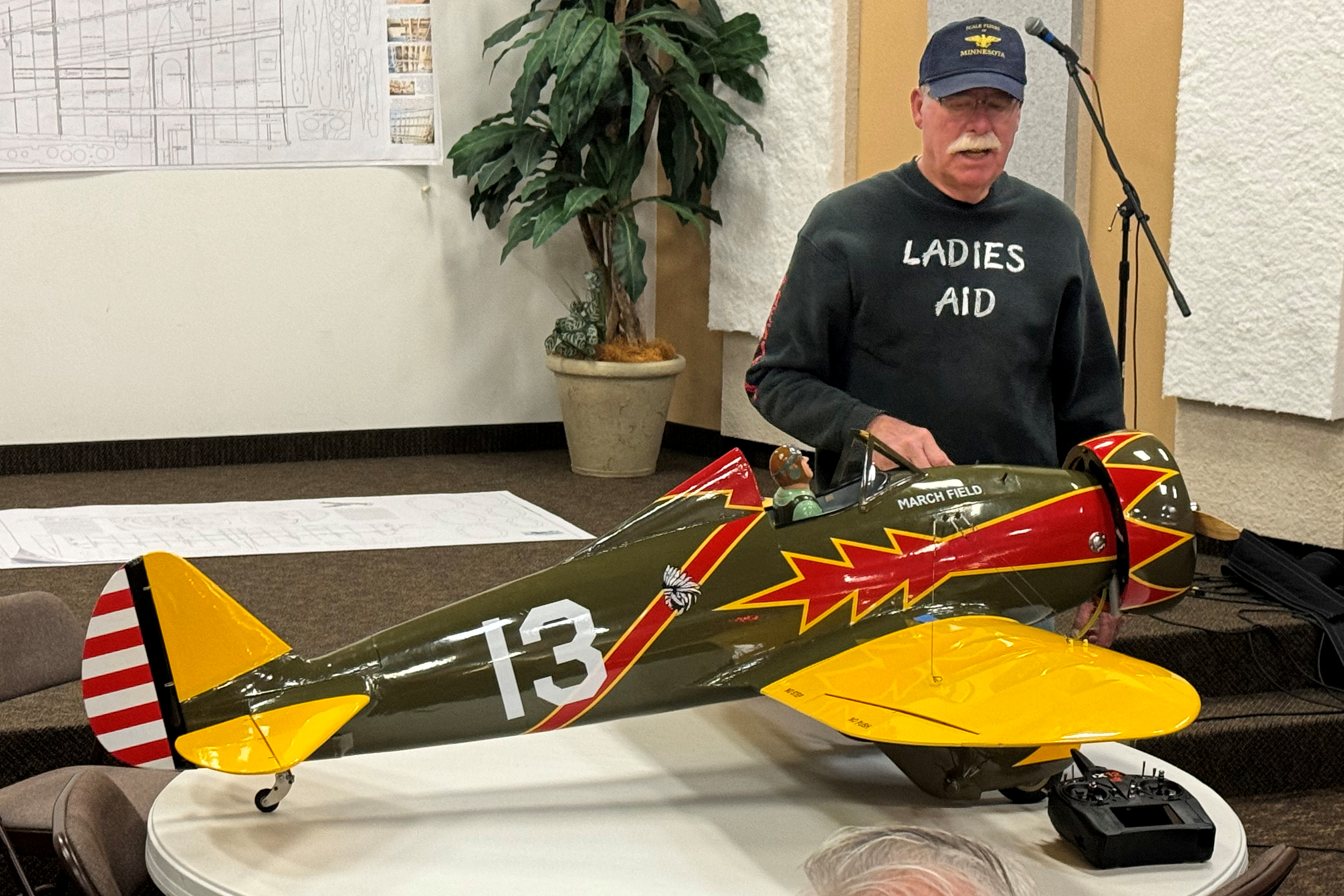
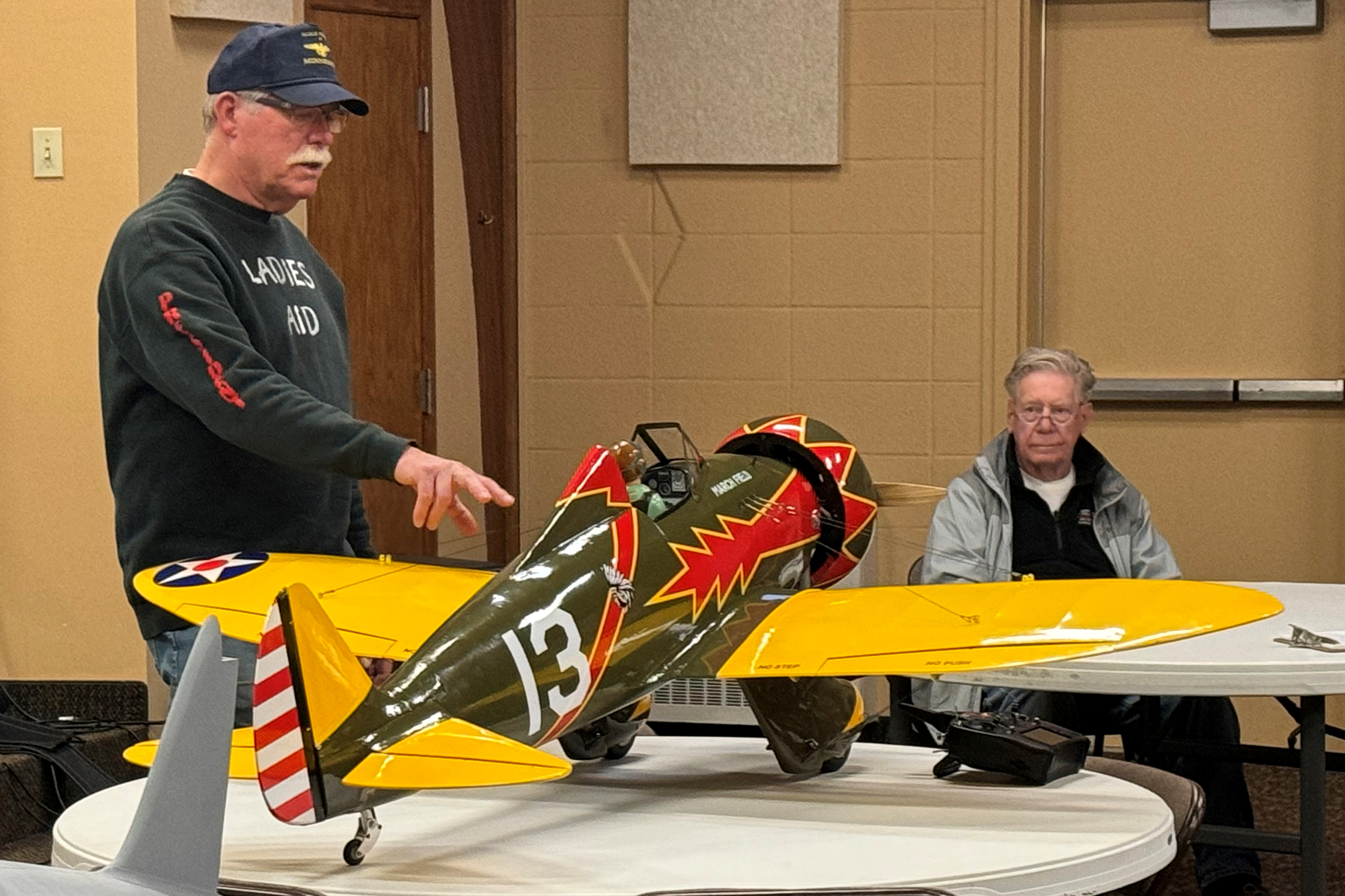
Phil
Zuidema’s Boeing P-26A Peashooter
Project |
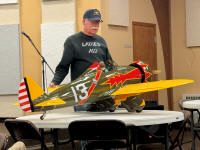
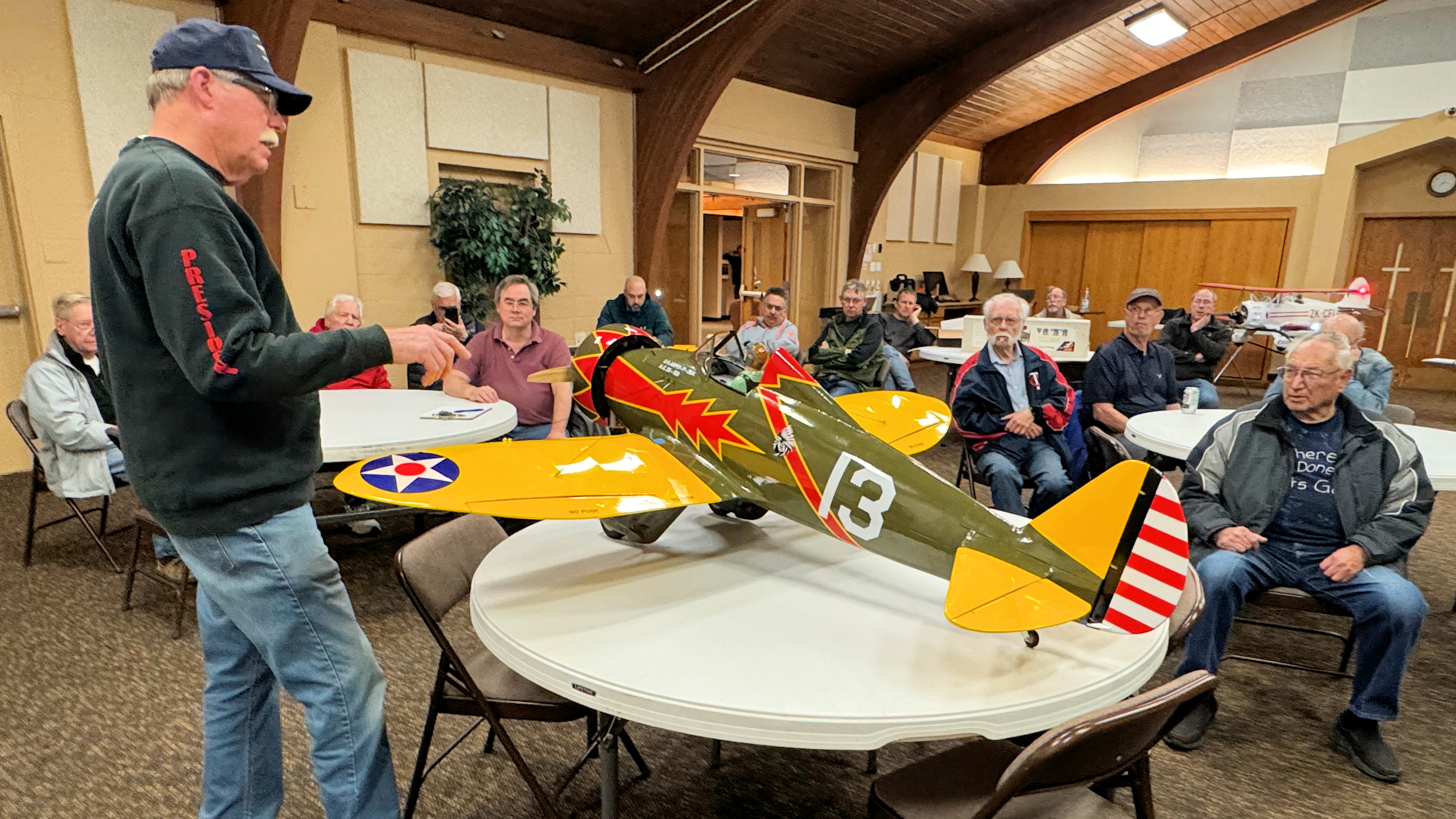
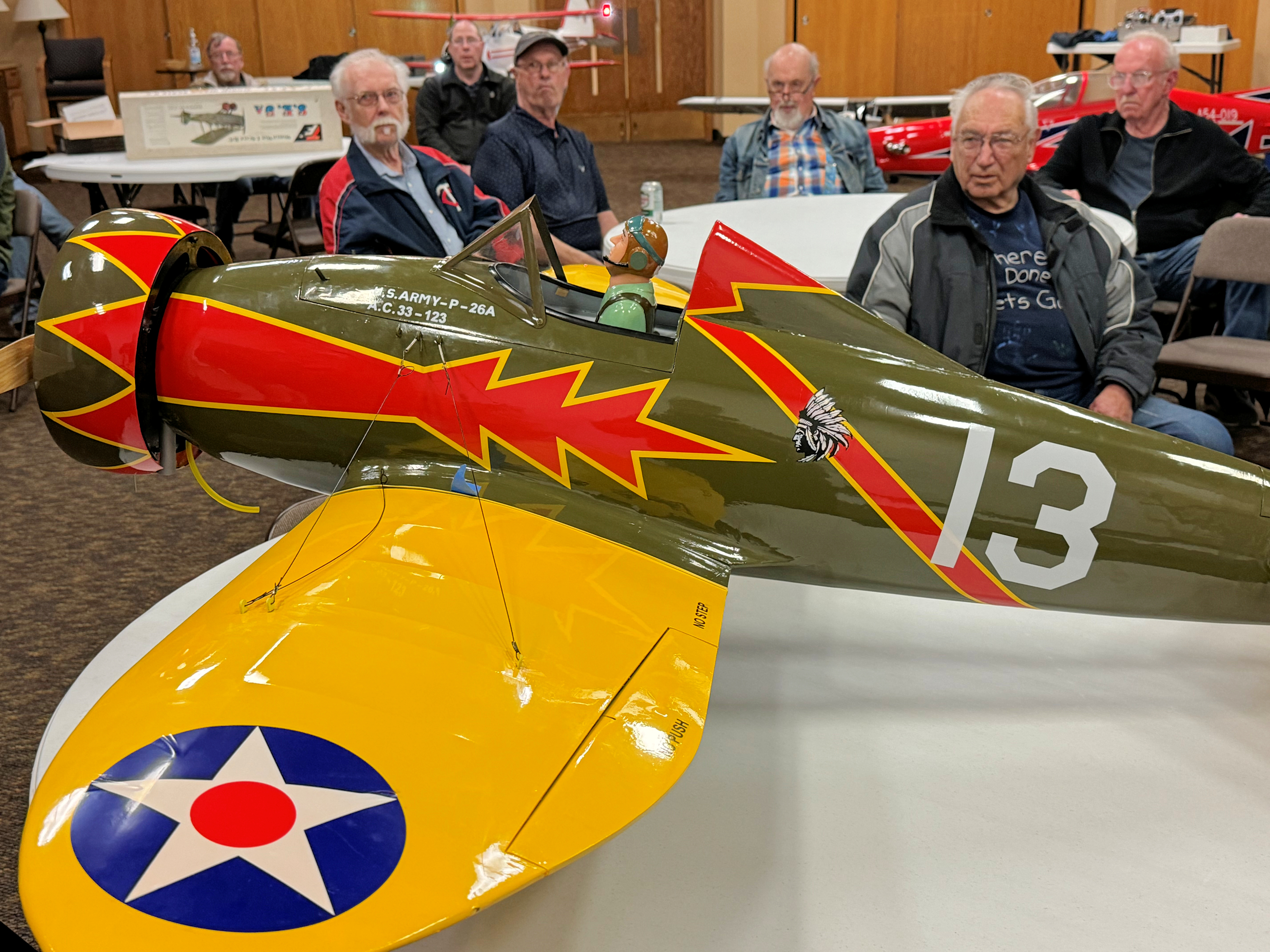
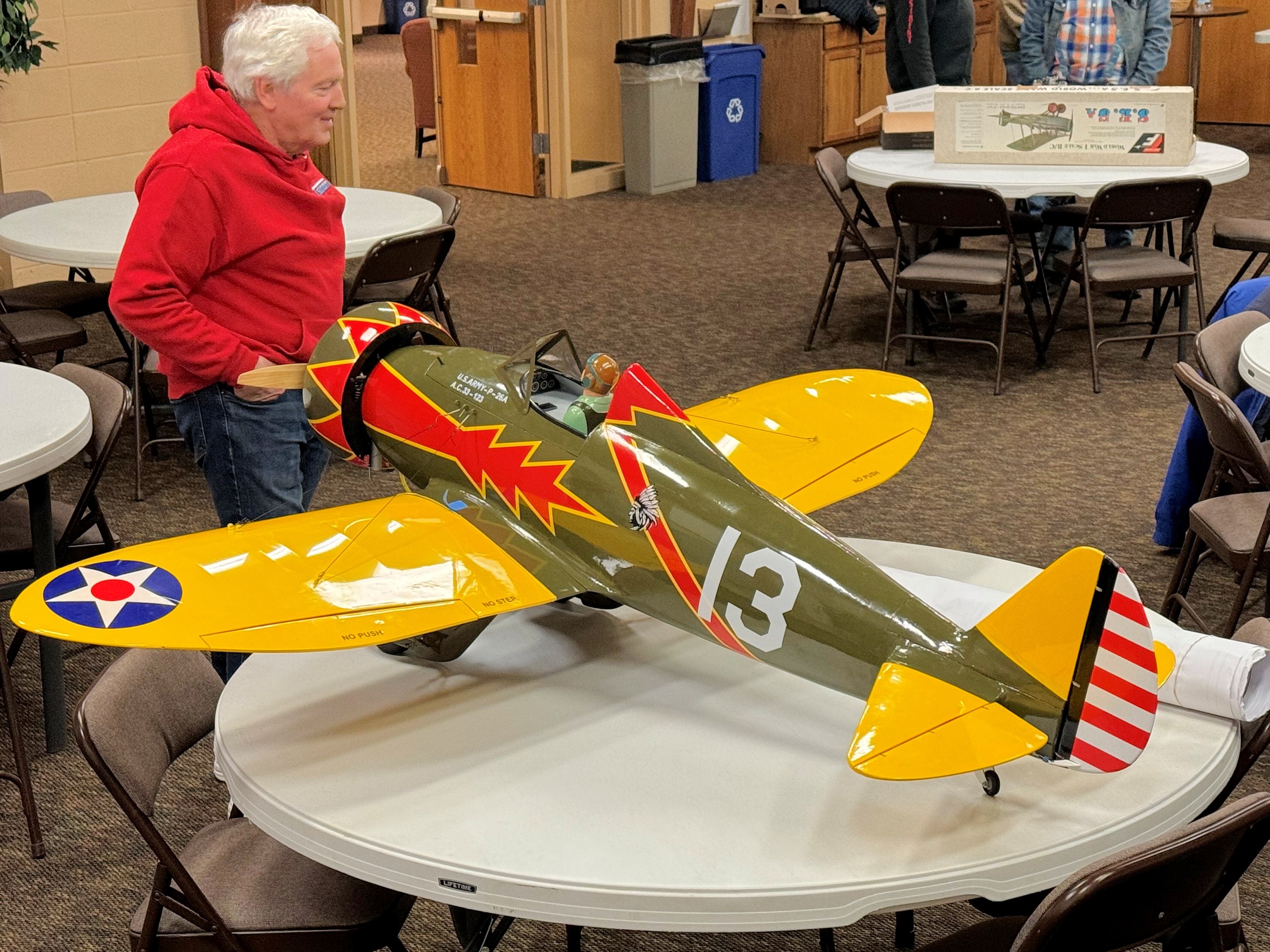
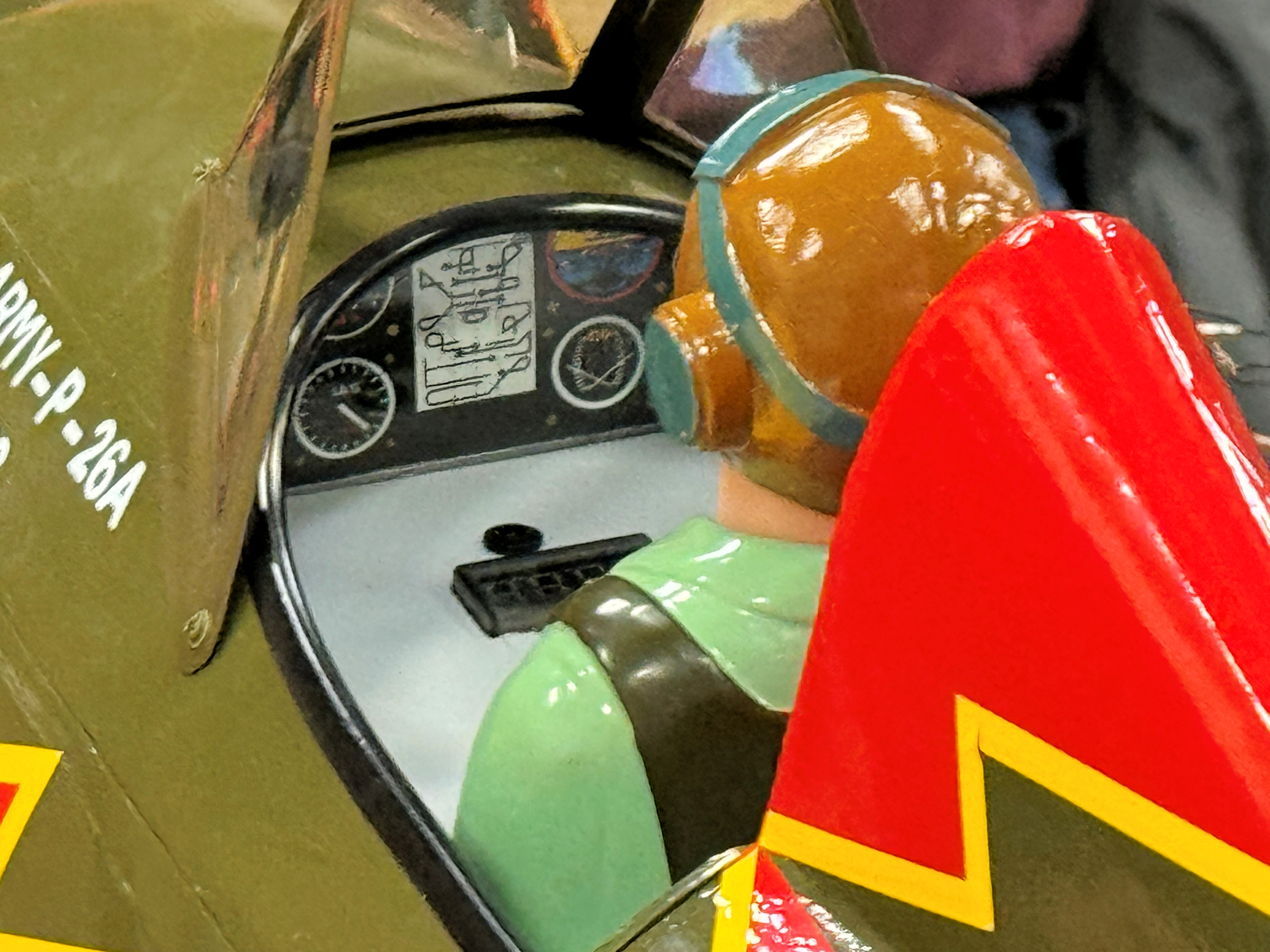
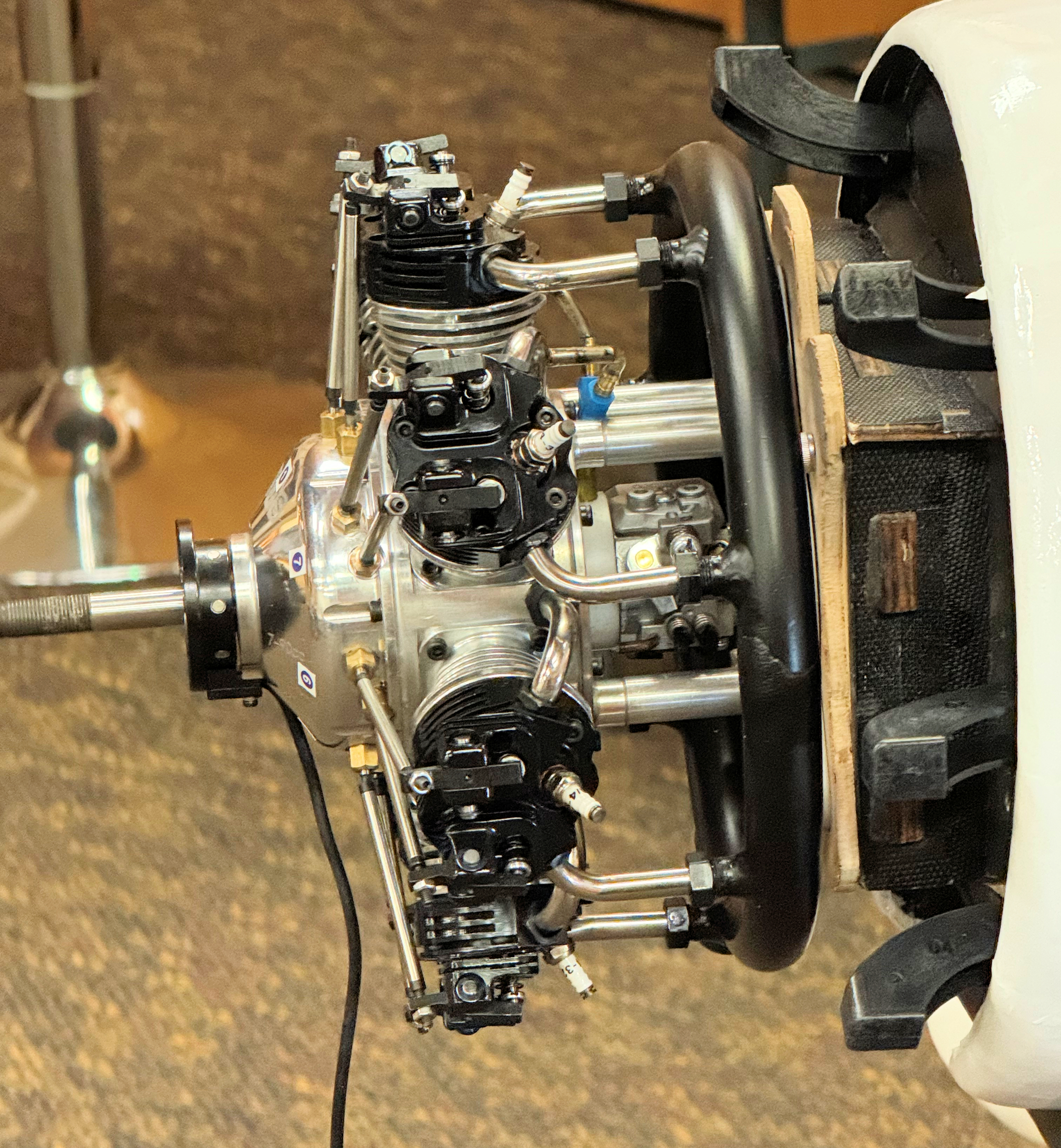
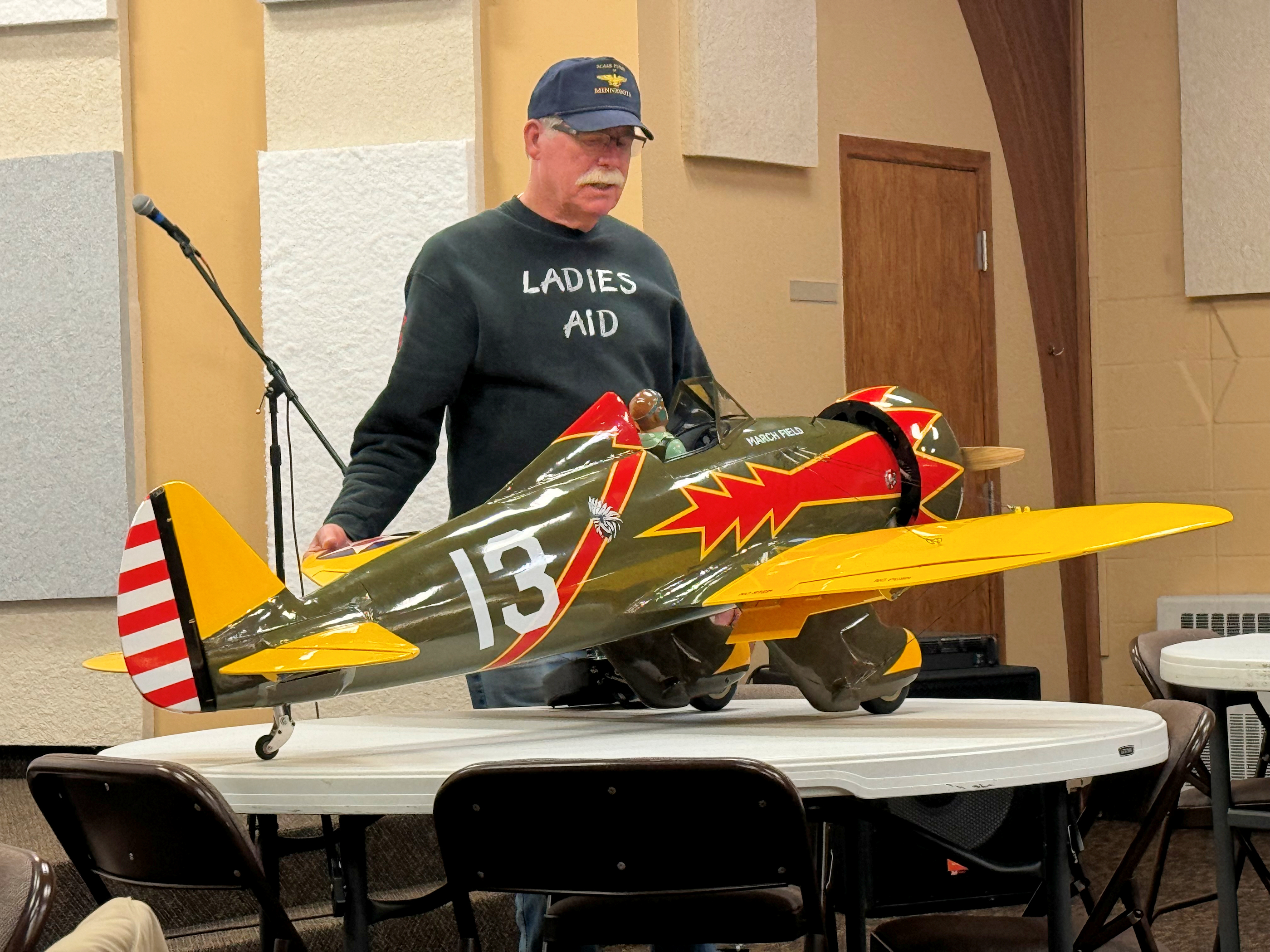
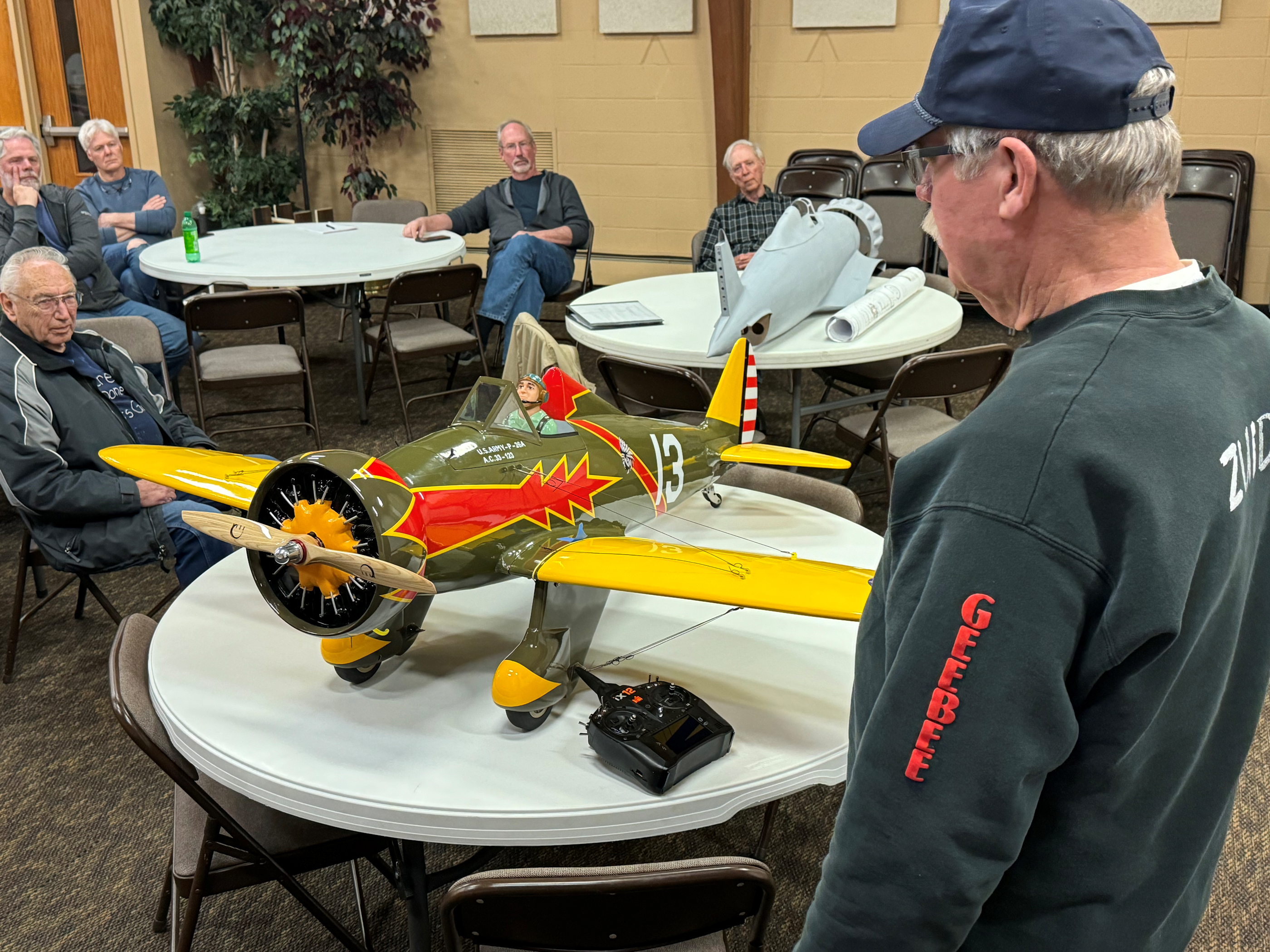
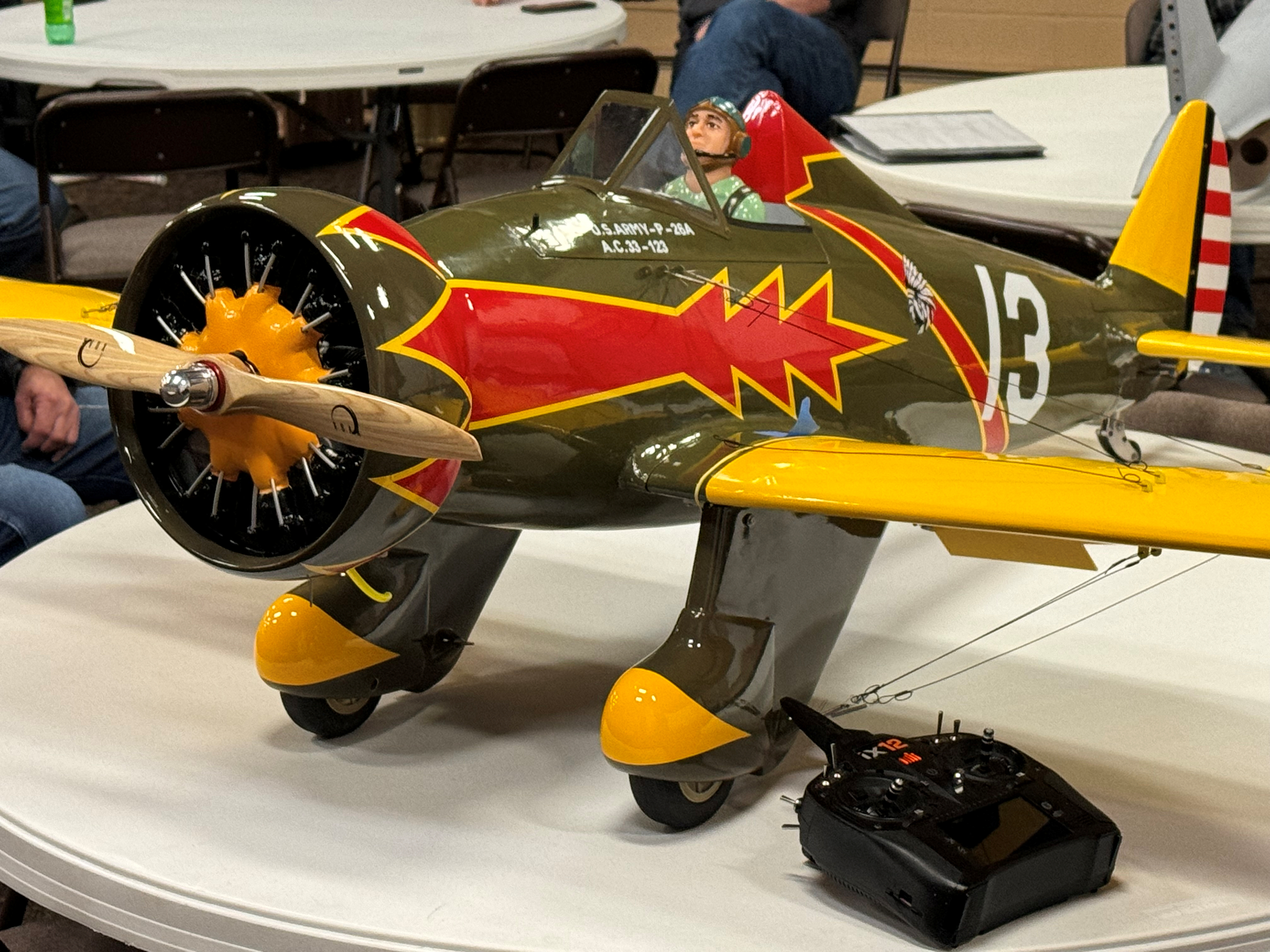
Phil shared his most
recent project: The Seagull Models
Boeing P-26A Peashooter!
Phil tells us:
“I was very pleased with the build
quality and the design of the kit and
model. The build was sturdy, but
light, and was one of the best ARFs I
have had. It was recommended for a
30cc or electric equivalent. I have a
pair of 31 cc VVRC twins I
purchased for a B-25 build, so I thought
I would break them in
on the Peashooter, if I were buying an
engine specifically for this model; I
would get the new VVRC twin 40cc
with the electric start. |
| |
|
The reason I say that is that it took an
additional 16 ounces of lead
at the front lip of the cowling to
balance it on the recommended CG bringing the all up weight to just under
19 lbs. I would rather have
had the larger engine to use for weight,
and the electric start would be cool, as
demonstrated by Jan Larsen on his Cub
(Jan demonstrated his starter.) Although the 30cc fits comfortably within the cowl a 40cc may require a
small amount of material removal.
There were really no minuses to
speak of except the flying wires were a
poor design by attaching with goofy
springs. I will retrofit with
clevises and heavier wires and rods
between the landing gears. The other
small minus is that the wheels/tires
seem to be made of hard plastic where a
rubber tire would give some bounce
dampenin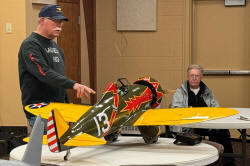 g. Getting the wheel pants
around the landing gear and then
getting the tires in were a challenge,
but great instructions made is less
challenging. I also wish they included
a gun-sight and gun, which they did not. g. Getting the wheel pants
around the landing gear and then
getting the tires in were a challenge,
but great instructions made is less
challenging. I also wish they included
a gun-sight and gun, which they did not.
Having had mediocre success landing a
Gee Bee model Z in crosswinds,
and the two airplanes being very similar
in landing gear construction and
placement, I will wait until the wind is
modest and straight down the runway to
maiden it. This means north/south
at the Grassfield. Before that I
will run a few tanks of fuel through it
to make sure the engine doesn't
get the hiccups at the most inopportune
time.
I look forward to getting comfortable
with it, then wringing it out.
It's a flat-bottom airfoil, so it may
take some getting used to
in the aerobatics department.”
Thanks for the report Phil! We look
forward to your maiden flight!
|
|
|
|
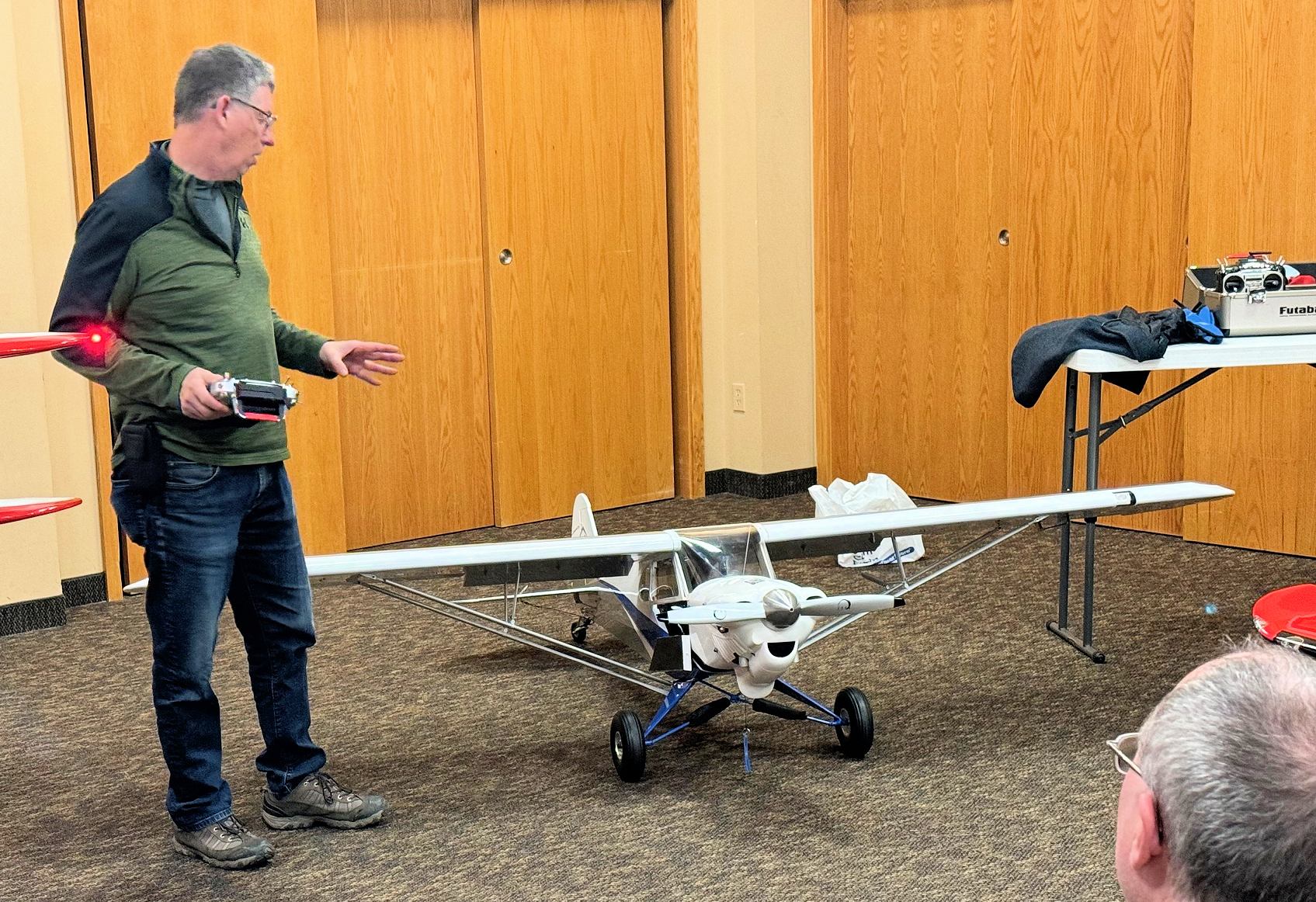
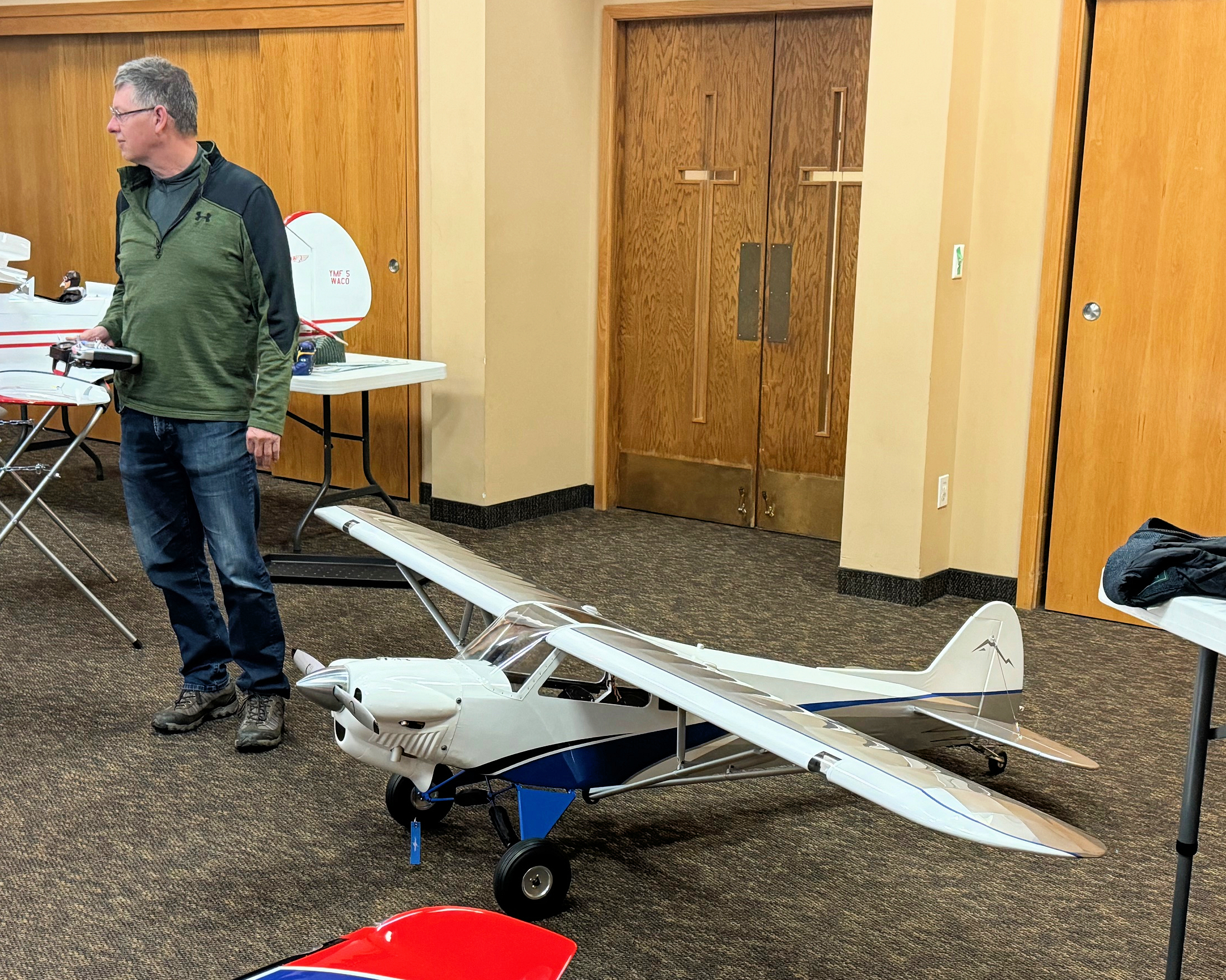
Jan Larsen’s CubCrafters 60cc XCub
Project
|
|
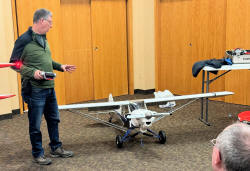
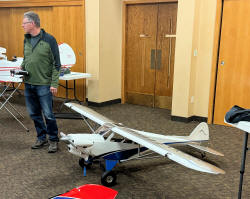
Jan brought in a 60cc Cub Crafters X-Cub from
Hangar 9 models. Jan has installed an EME 70cc
twin with auto start capability. He’s been
flying it for the past month and finds
how much fun it is to run full flaps
into a light headwind and actually hover
in place.
Jan’s looking for a new place to fly due
to the loss of the SodBuster’s RC Flying
Site on Manning Ave, I-94 near
Stillwater, MN.
|
 |
 |
|
Our Fall meeting schedule
tentatively looks like:
-
Friday
October 25, 2024
-
Friday
November 29, 2024
-
Friday
December 27, 2024
-
Friday
January 31, 2025
-
Friday
February 28, 2025
-
Friday
March 28, 2025
-
Friday
April 25, 2025
|
|
|
David Andersen’s
New
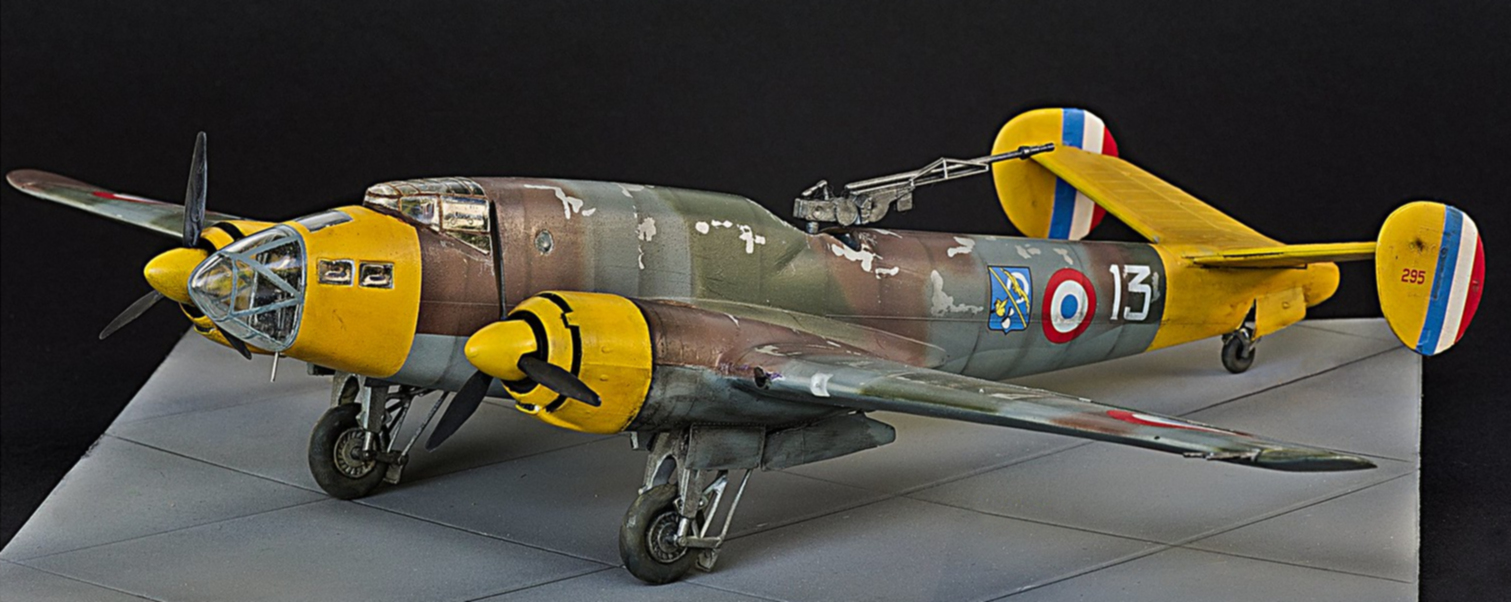
Scale LeO 451 Project
|
|
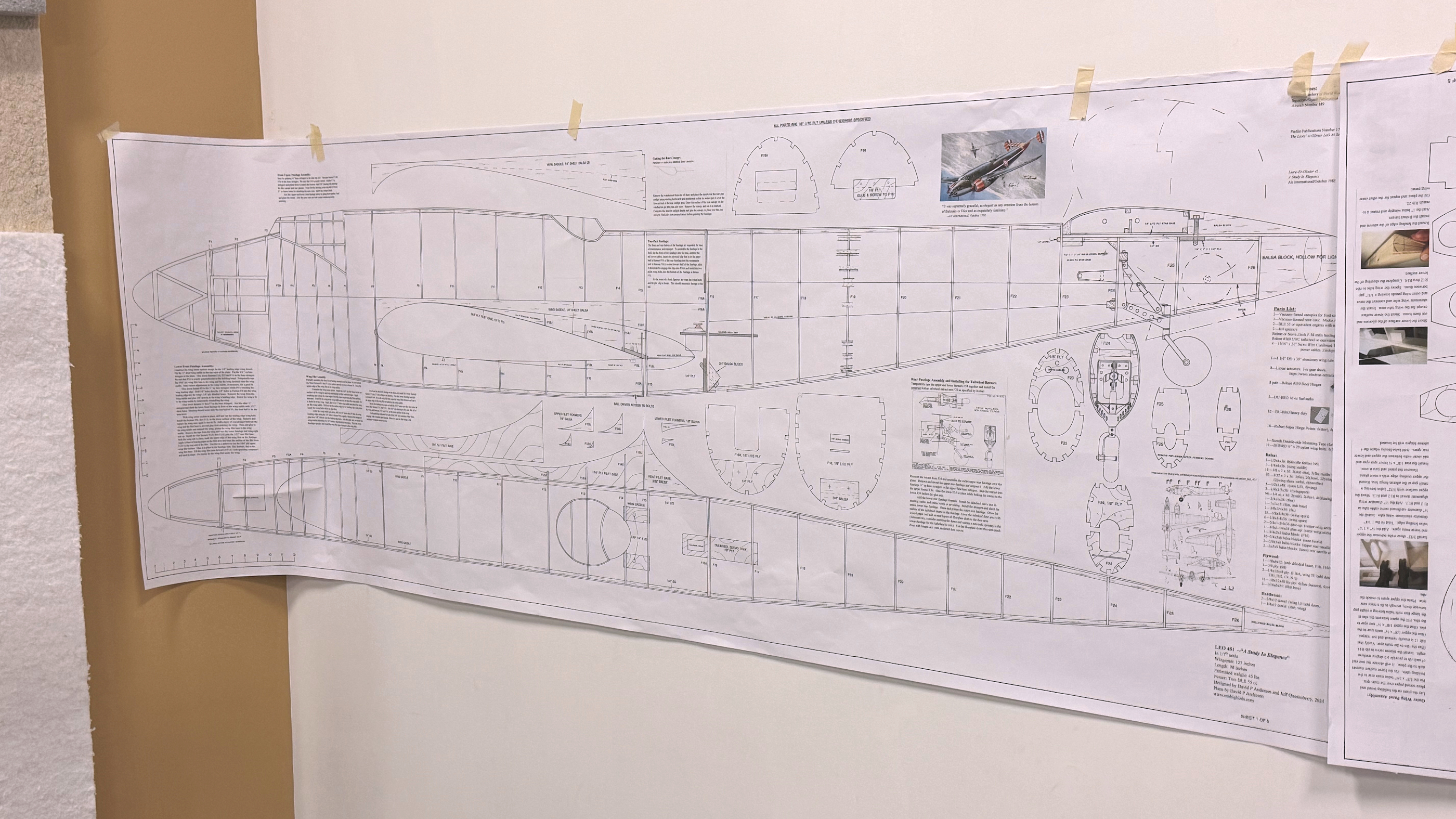
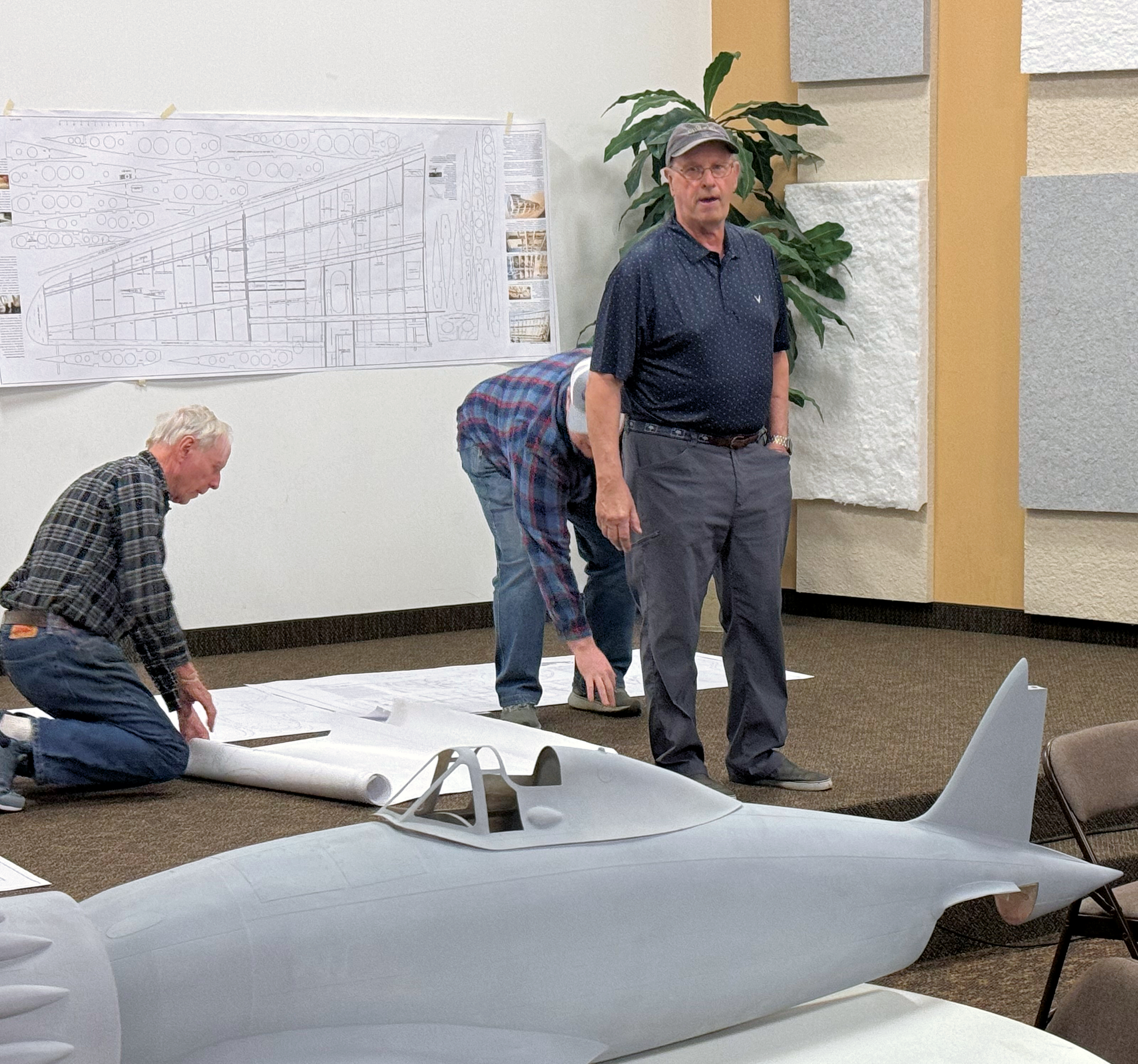
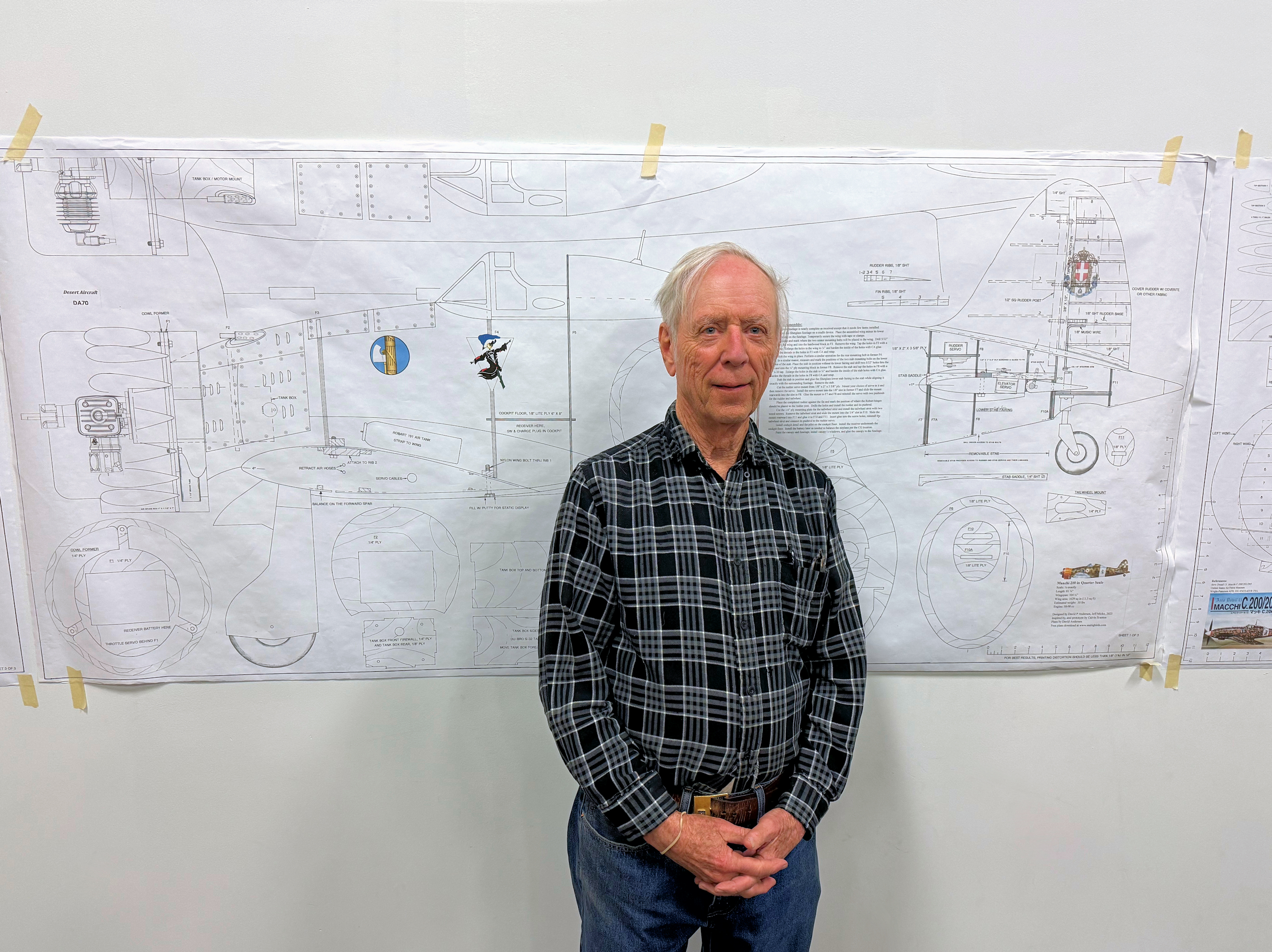
Dave wallpapered the church with his
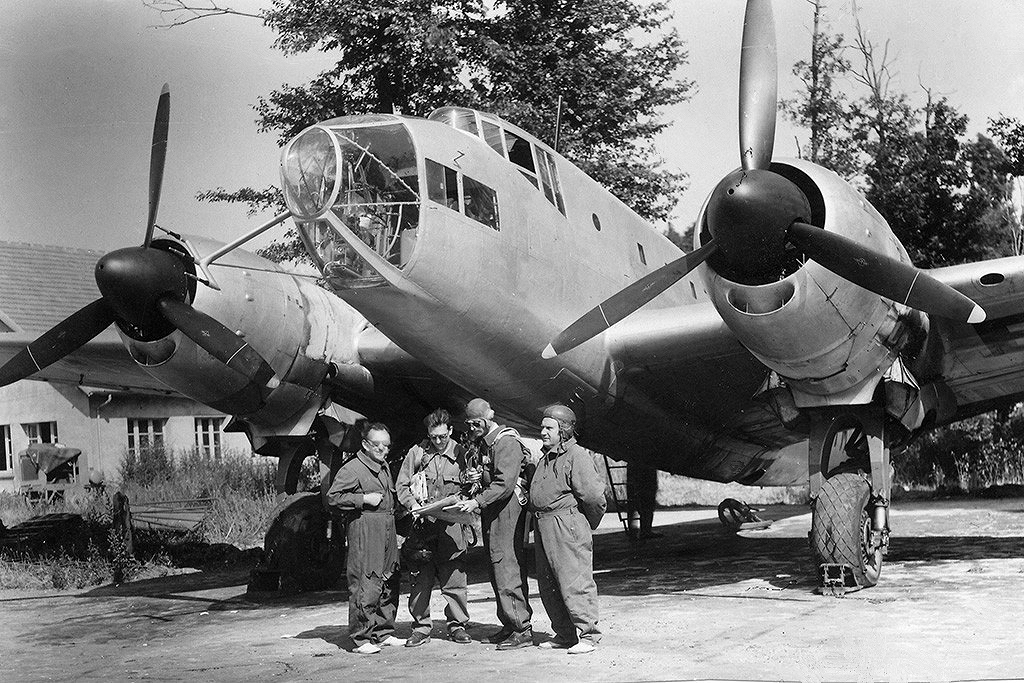
latest design project, the Liore et
Olivier LeO 451 twin engine medium
bomber.
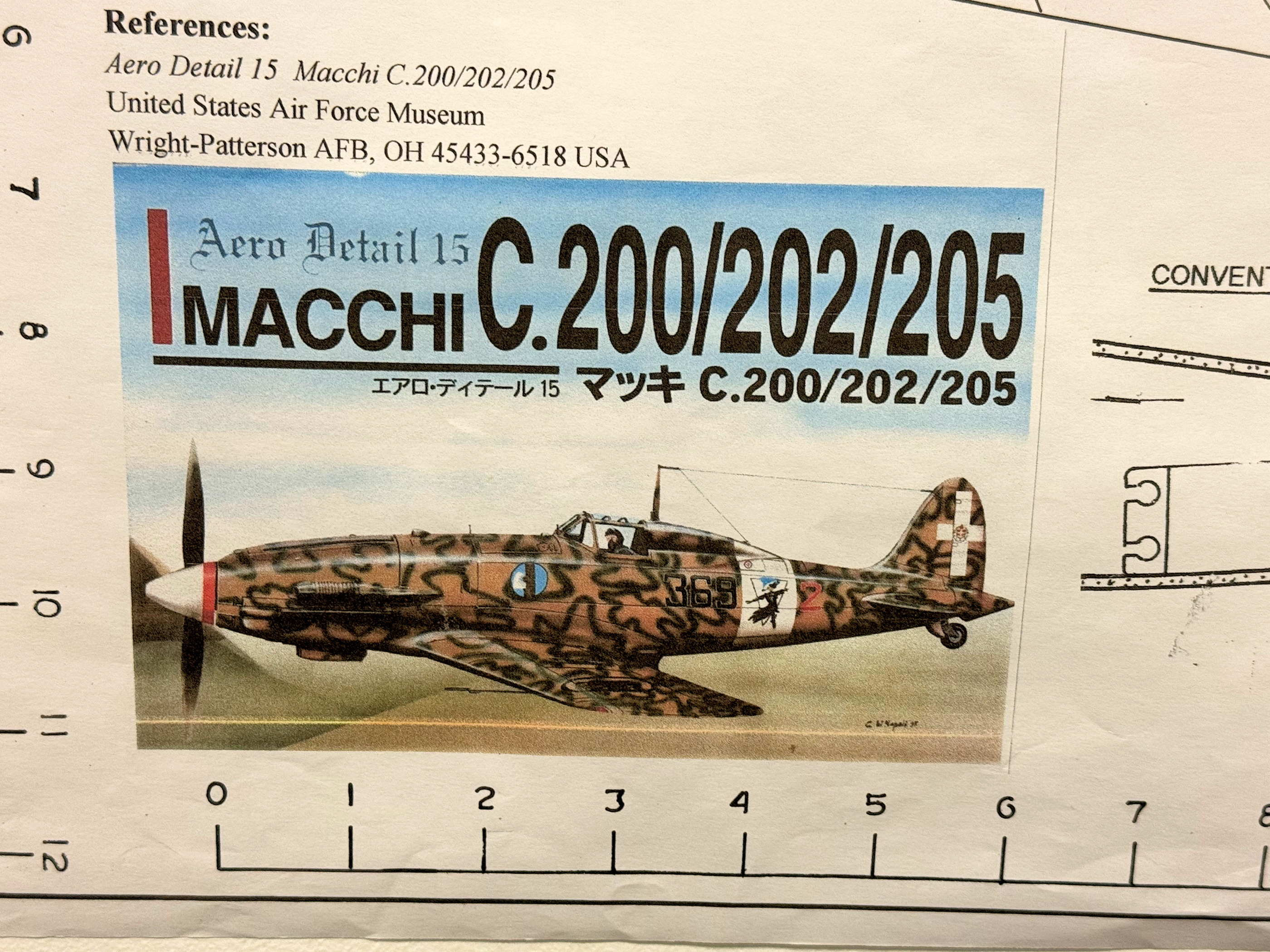
He also showed and presented
h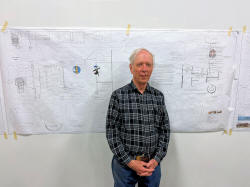 is Maachi C.200 plans to highlight
his new style of building plans that are
presented in color. is Maachi C.200 plans to highlight
his new style of building plans that are
presented in color.
He focused his discussion his latest scale design project, the
Liore
et Olivier, LeO 451 a very unique twin engine medium
French bomber. This is his first
French R/C Design! |
| |
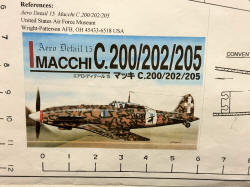 |
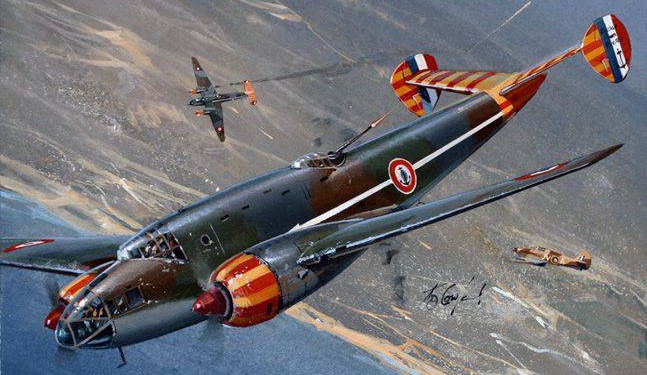
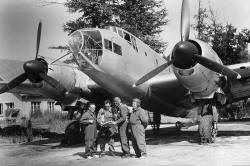
The most significant
French bomber was the Liori et Olivier LeO 451. Introduced in 1937, this medium bomber, crewed
by four, was driven by two 1,060-horsepower
Gnome-Rhone 14N engines and could achieve a top
speed of 298 miles per hour. |
| |
|
Service ceiling was
29,530 feet and range was 1,802 miles. The LeO
451 carried a bomb load of 3,086 pounds
 and was
armed with a single 20-millimeter cannon and
five 7.5-millimeter machine guns. Only 373 of
these aircraft had been delivered to French
forces before the armistice was signed with
Germany on June 25, 1940. However, more were
delivered to the Vichy French Air Force. and was
armed with a single 20-millimeter cannon and
five 7.5-millimeter machine guns. Only 373 of
these aircraft had been delivered to French
forces before the armistice was signed with
Germany on June 25, 1940. However, more were
delivered to the Vichy French Air Force.
Dave told us:
The project
is a bit complicated due to the placement of the nacelles on a tapered
dihedral wing and dihedral in the s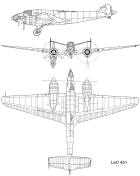 tab with twin
fins. Elaborate marking and colors are
available. Another plus is an airplane that
writers have called “elegant.” tab with twin
fins. Elaborate marking and colors are
available. Another plus is an airplane that
writers have called “elegant.”
In order to verify correct
part shapes I built part of the wing and
nacelle together.This also allowed me to add
construction photos to the plans.
Jeff Micko is
vacuum forming the large glass nose and cabin.
Jeff Quesenberry is building the prototype
and
is also listed on the plans as a co-designer.

Drawing the plans was 7
months of work. The maiden flight (at Jeff Q's
place) in North Carolina will be at least a year
away.”
Liore et Olivier LeO 451
|
| |
|
Roy
Maynard’s Pilatus PC-21 Turboprop
Project |
|
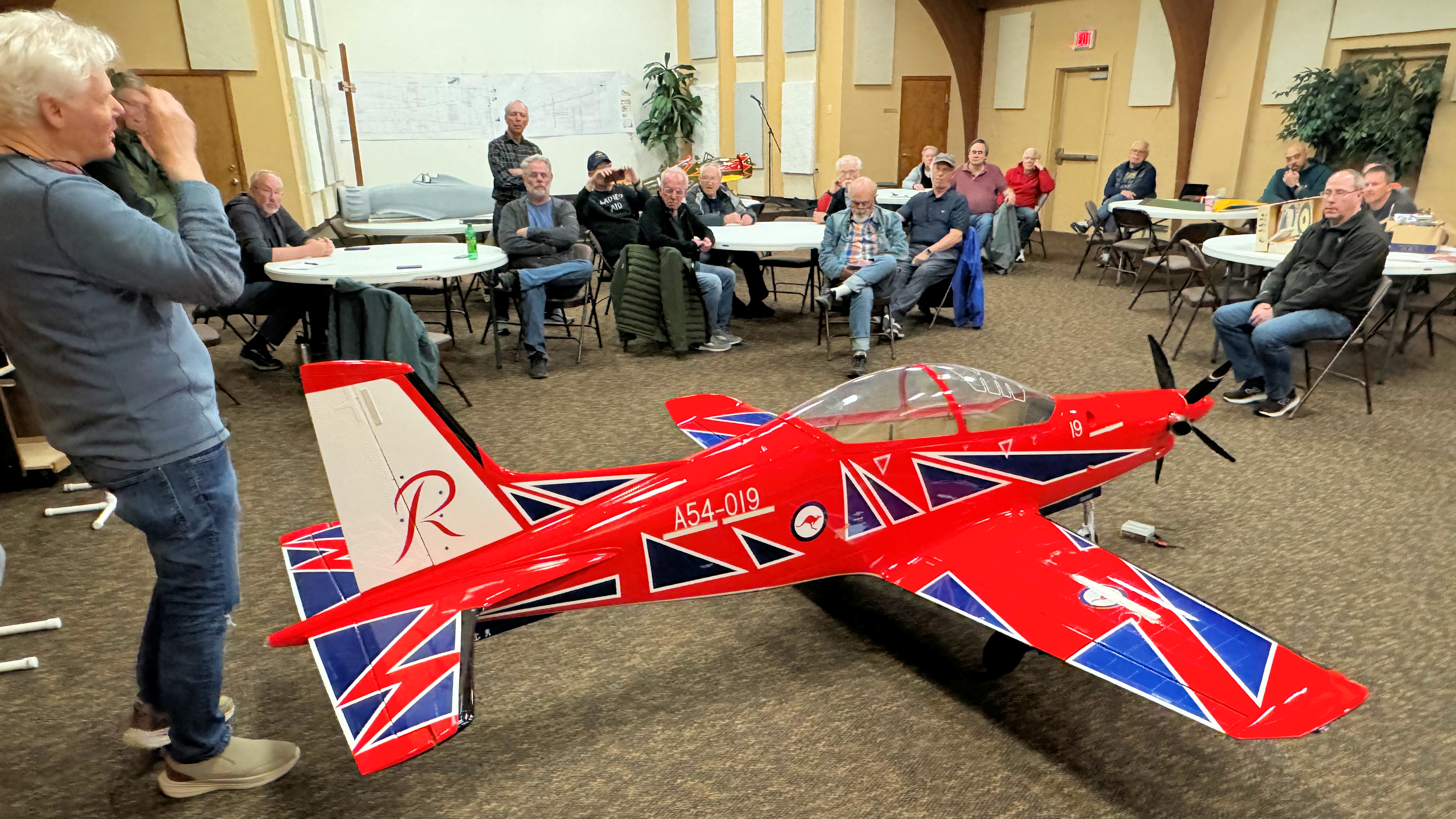
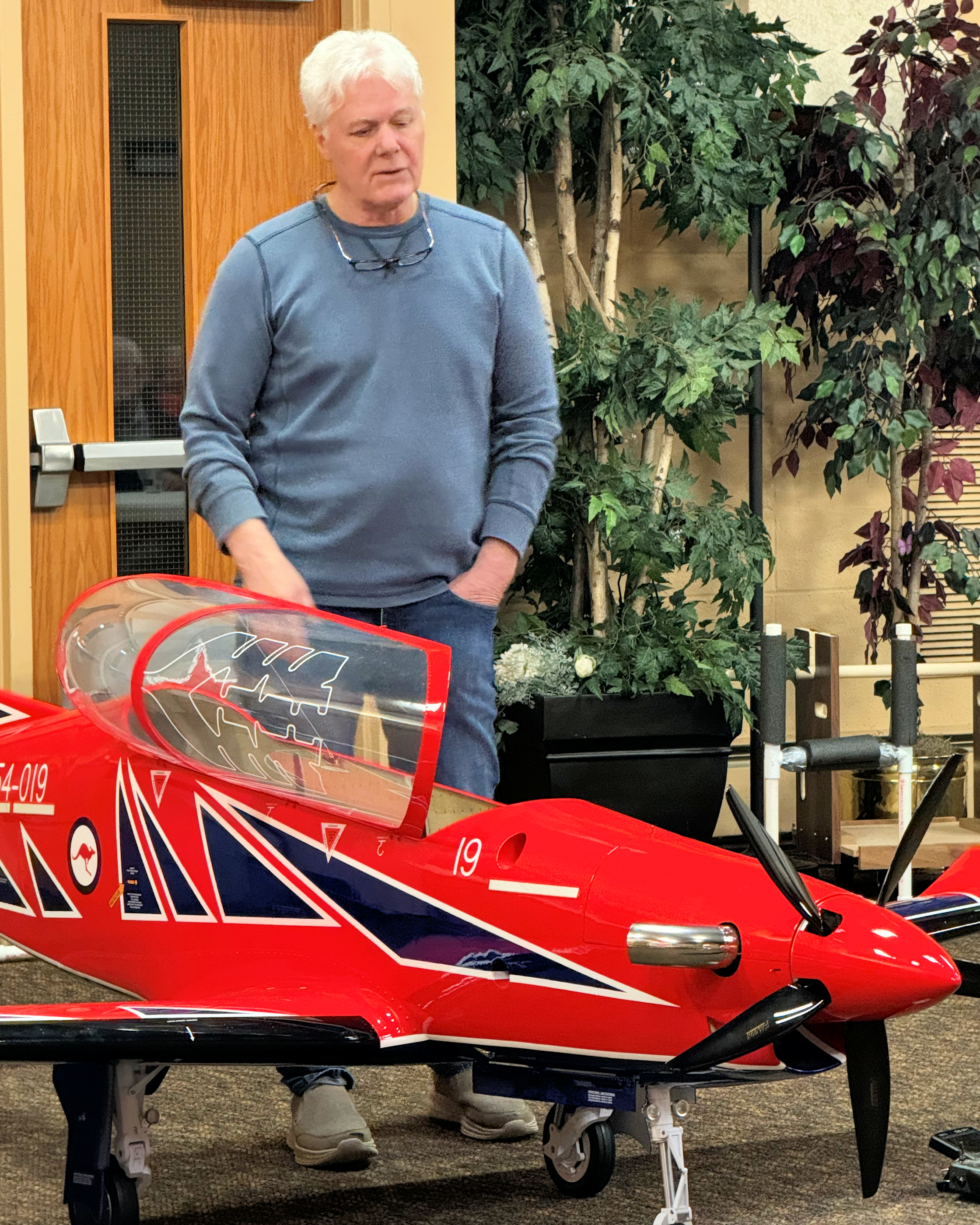
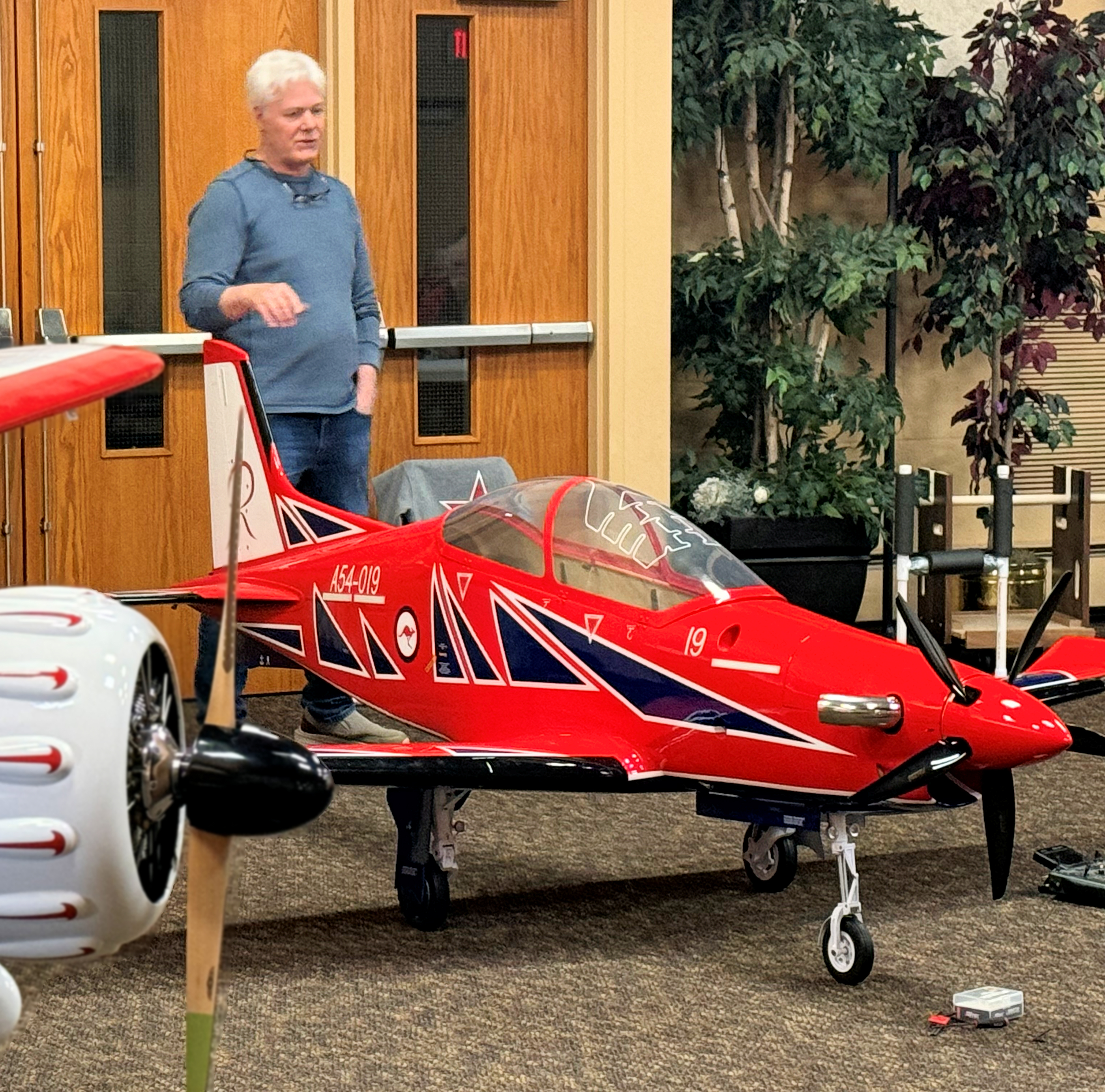
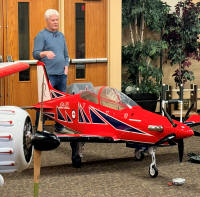
Roy shared his
latest project, a 3.4m Pilatus PC-21
Turboprop from Wind RC (China), imported
by Chief Aircraft.
Roy tells us:
“The kit has been on the market for
several years. Th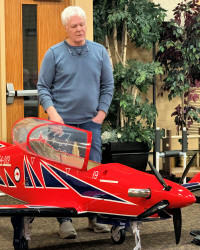 e scale is
approximately 1:3.4 with a 107.5
wingspan and is 134 in length that is
modeled after RAAF demo team. The kit
came with gear installed, wire
harnesses for servos, lights, retracts
and brakes. Additional items also
included were a scale cockpit tub,
spinner, and drop tanks. e scale is
approximately 1:3.4 with a 107.5
wingspan and is 134 in length that is
modeled after RAAF demo team. The kit
came with gear installed, wire
harnesses for servos, lights, retracts
and brakes. Additional items also
included were a scale cockpit tub,
spinner, and drop tanks.
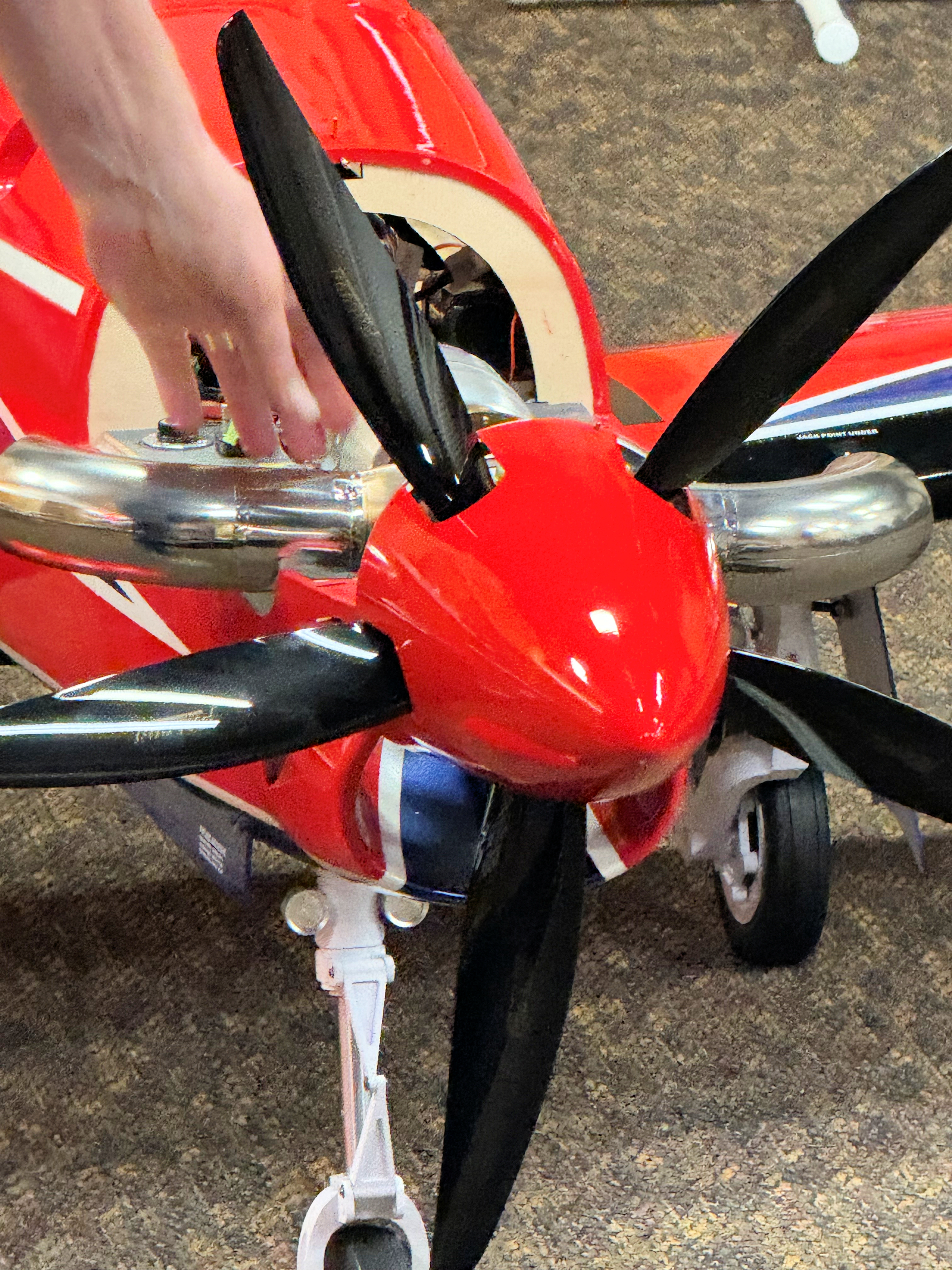
Power is provided by
a JetCat SPT10 turboprop prop turning a
5-blade 24x23 propeller and guidance by
JETI with full telemetry.
Positive
aspects of the kit include the high
degree of prefabrication and
quality of the paint job with light
system, retract
wire harnessing
 all installed. The turboprop is almost a drop in with
some shimming required.
On the negative side the kit comes with
no manuals. After finding
the manuals there are still some issues. all installed. The turboprop is almost a drop in with
some shimming required.
On the negative side the kit comes with
no manuals. After finding
the manuals there are still some issues.
There were no
diagrams or instructions on best way to
install the fuel and electronic
systems. The only major issue I
encountered was a small leak in the fuel
tank which was easily repaired.
The model required 32 ounces in nose to
balance. It will be flying this
summer!”
Thanks Roy! We’ll
look forward to seeing it fly at
Minnesota Jets!
Pilatus PC-21
Technical Spec’s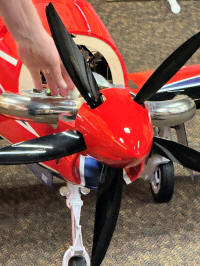
-
Wingspan: 107.5" (2.73m)
-
Length: 133.85" (3.4m)
-
Height: 47.24" (1.2m)
- Dry
Weight: 52.8-55 lbs (24-25kg)
-
Turboprop: SPT10 or similar
- Fuel
Tank: 3L (101 oz) composite
- UAT
(included): 150mL
- Servos
(Included): (10) GDW830
|
| |
|
Ahmed El
Bassal’s 45% Scale Me-163 Update! |
|
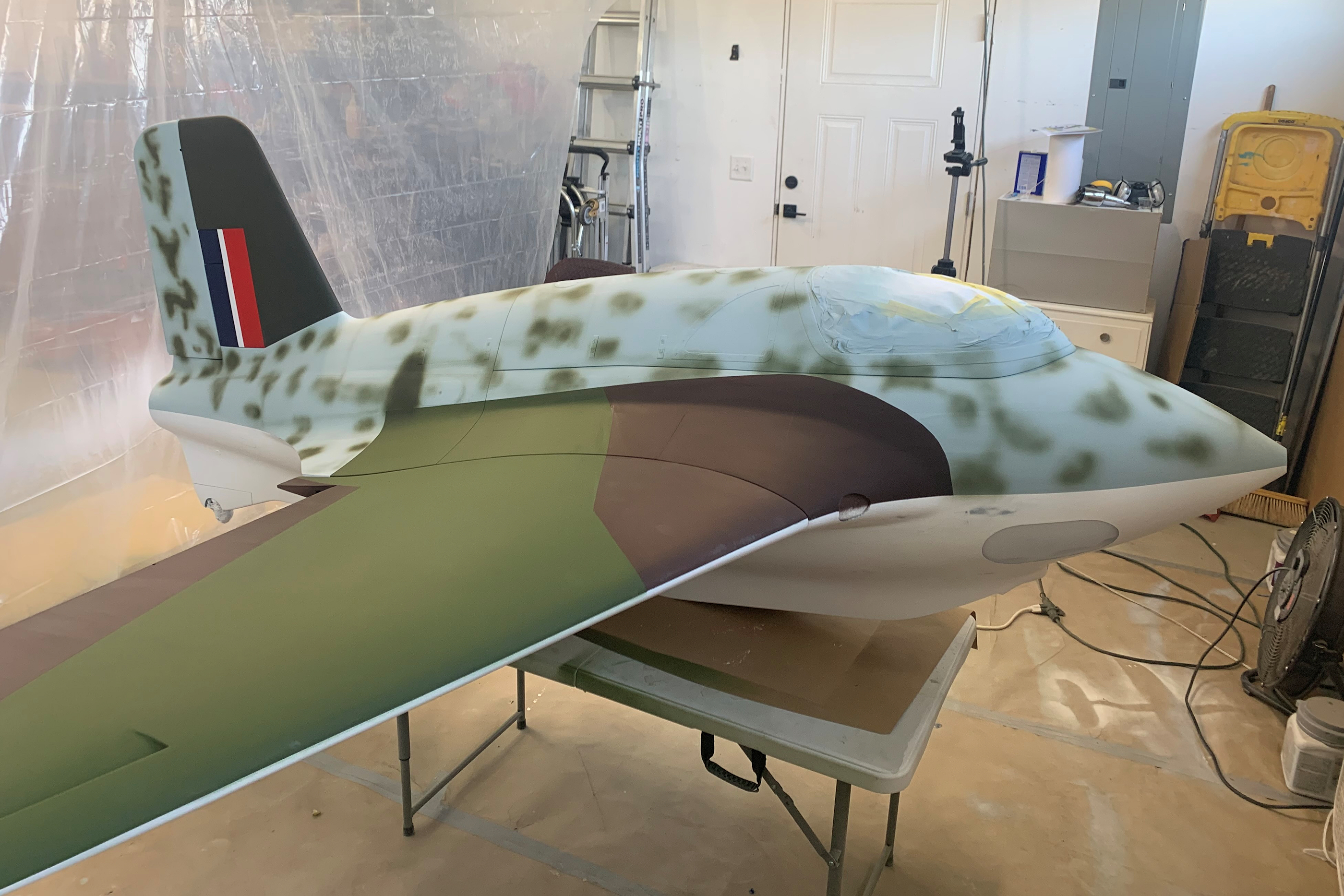
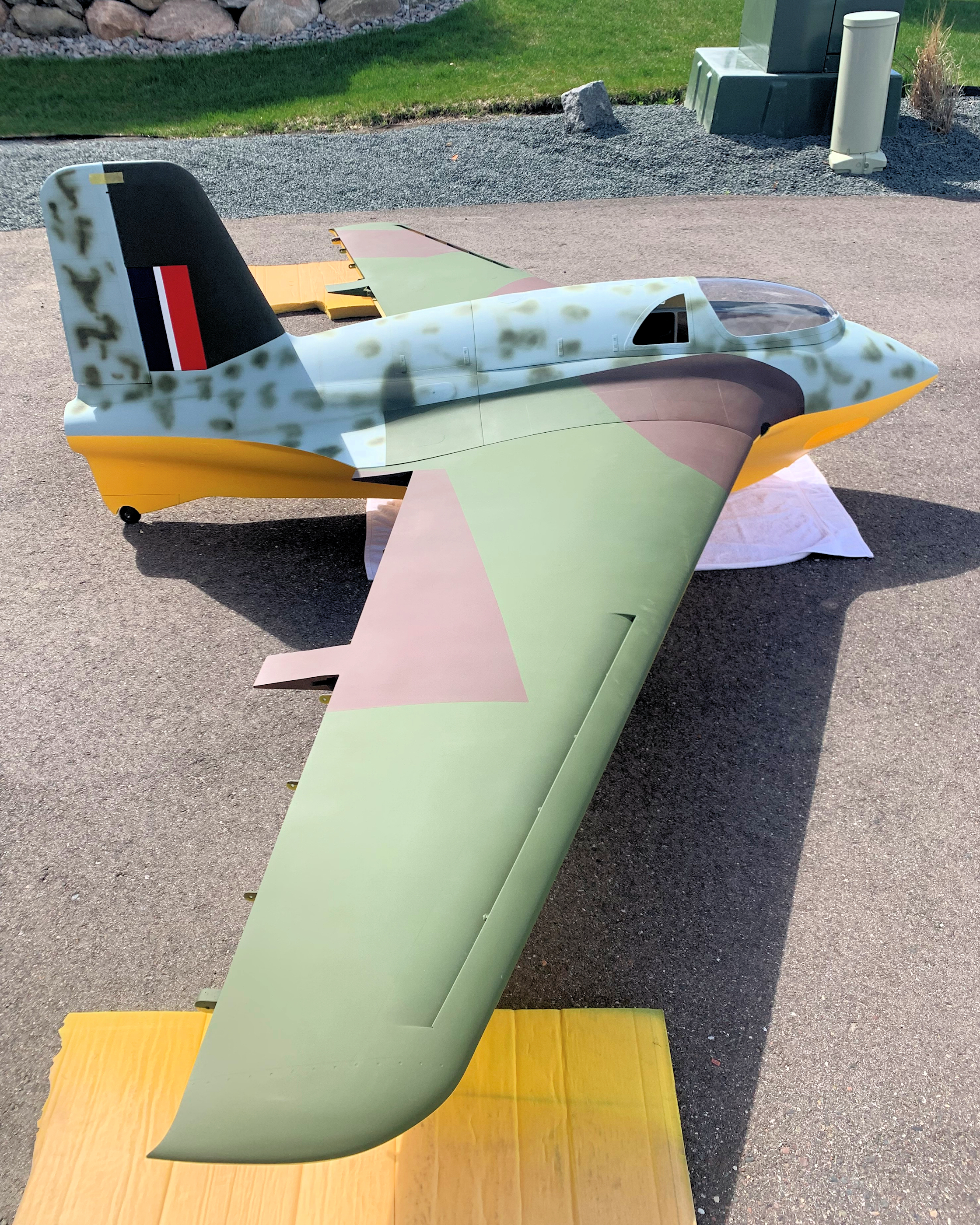
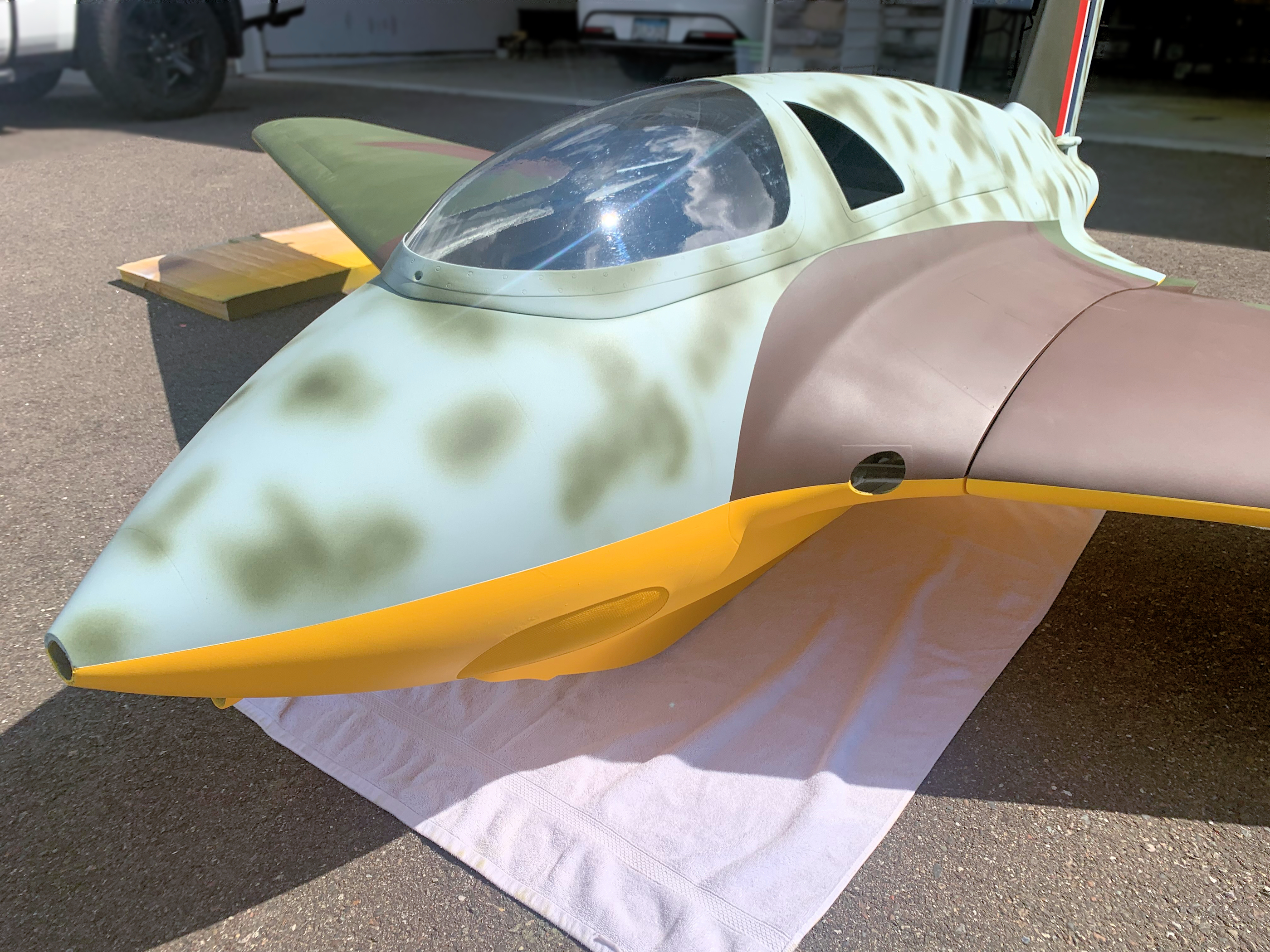
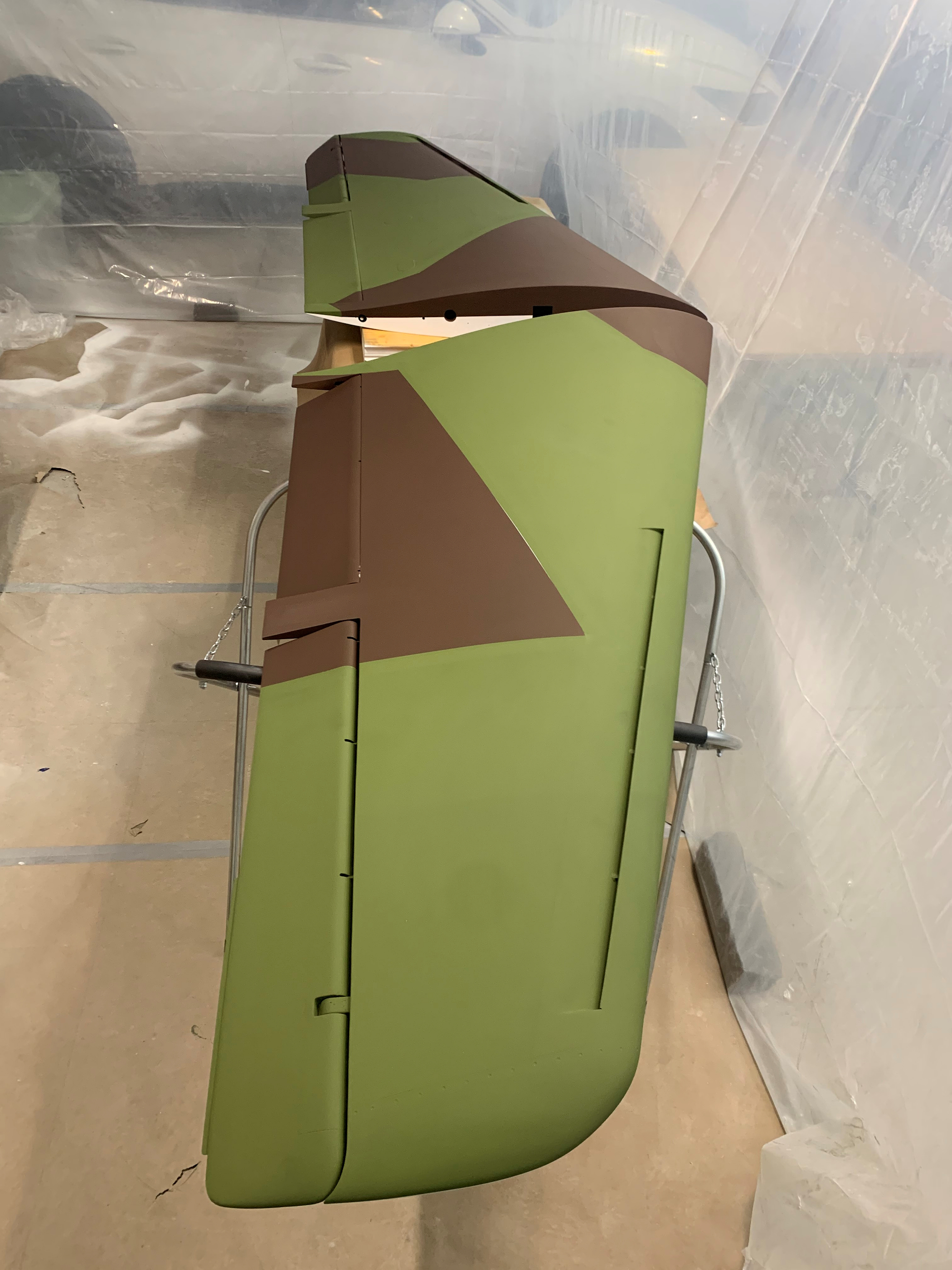
Brandon
Archer has been painting the 1st production
model of the Me-163 to the client’s
specifications as a British captured aircraft in
a combination of the original German colors with
British markings for flight eval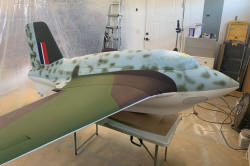 uation.
Brandon has transformed his garage into a formal
paint booth (with the permission of his wife!). uation.
Brandon has transformed his garage into a formal
paint booth (with the permission of his wife!).
Brandon tells us: "This is Ahmeds Elbassal's 45%
ME 163 Komet Custom built for renowned RC pilot
and product developer at Horizon Hobby Ali
Machinchy. I was commissioned to paint
this project that has a 14 ft wingspan makes it
a bit of an endeavor, however its a great
opportunity to test my skills on a larger
subject.
I love
painting and I can say that my Art/Graphic
Design Degree from college finally gets some
use! Ha! One of the challenges wit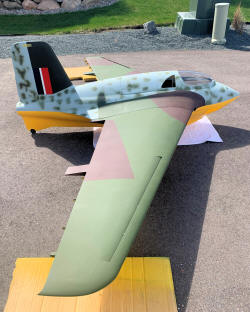 h
any large scale aircraft is the significant cost
of high-end paints like automotive grade paints
or Klasskote. I've been doing lots of
smaller electrics with Hobbycraft Acrylic Paint
which is a great alternative to some of the more
expensive acrylic craft paints like Tamiya
Vellajo that of course all have their place.
The other great thing especially for covering
large areas is that you can buy these in larger
bulk sizes and they mix very well. The
best thing to me besides the price is the easy
cleanup with just soap, water and a mild solvent
if needed. The largest challenge with this
project was making sure that the acrylic paint
would hold up to an automotive grade 2K clear
coat which we knew we wa h
any large scale aircraft is the significant cost
of high-end paints like automotive grade paints
or Klasskote. I've been doing lots of
smaller electrics with Hobbycraft Acrylic Paint
which is a great alternative to some of the more
expensive acrylic craft paints like Tamiya
Vellajo that of course all have their place.
The other great thing especially for covering
large areas is that you can buy these in larger
bulk sizes and they mix very well. The
best thing to me besides the price is the easy
cleanup with just soap, water and a mild solvent
if needed. The largest challenge with this
project was making sure that the acrylic paint
would hold up to an automotive grade 2K clear
coat which we knew we wa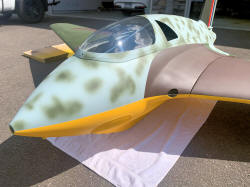 nted
to use so I took this challenge on as more of an
experiment knowing we may have to, switch to the
more expensive paint later if the results were
not positive. nted
to use so I took this challenge on as more of an
experiment knowing we may have to, switch to the
more expensive paint later if the results were
not positive.
Ahmed used a two-part epoxy primer used in
Automotive applications we then sprayed acrylic
craft paint many of which were owned by Plaid
the parent company to paints like Apple Barrel,
Craftsmart, Folk art Etc. these can be found at
you local craft stores like Michael's, Hobby
Lobby etc. I also wanted to do a test on
Rustoleum 2x paint which I used a lot of on my
projects. For the clear coat you knew we
wanted to use Spray Max 2K clear matte. I
found it to be great it goes down pretty
consistently with no issues be sure to wear
respirator and have proper ventilation as this
is commercial grade product and very strong.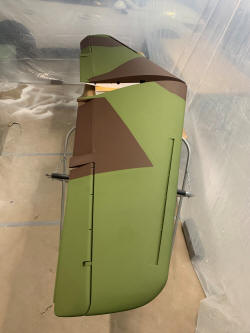
My
Recommendations: Use Folk Art Craft
Paint, it's consistent and durable.
Pluses: Inexpensive paint that can
cover large areas. I mix Acrylic thinner
to paint at 50/50.
Minuses of the project?: The lower
grades like Apple Barrel and Craftsmart seem to
be very sensitive paints and even wiping with
water changed the color permanently which played
to my favor a few times but I also had to
re-spray some areas.
The
anticipated maiden flight will be at MN Jets at
SMMAC near Owatonna, MN June 13th or 14th Ali
will maiden the aircraft “
|
|